
Choosing a US White-Label Development Agency for AI Projects

White-label development agencies in the USA are third-party firms that build software, AI automations or voice solutions under your brand, letting you keep the client relationship and margin. They specialize in custom code, integrate with platforms like OpenAI, AWS, Google Cloud, and deliver on a fixed-scope pilot before scaling. Choosing the right partner requires checking technical depth, reliability, pricing structure and contractual safeguards.
Key takeaways
- A US white-label partner lets you say yes to AI projects without hiring developers.
- Verify AI expertise through proven OpenAI, LangChain, or Azure OpenAI implementations.
- Look for fixed-scope pilots, clear turnaround bands and a single point of contact.
- Protect your brand with NDA, non-circumvent clauses and a partner-only dashboard.
- Target agencies 5-15 people in the US, UK or AU that list no development services.
- Aim for a wholesale margin of 50-70% on $2k-5k projects and a $1.5k monthly retainer for ongoing work.
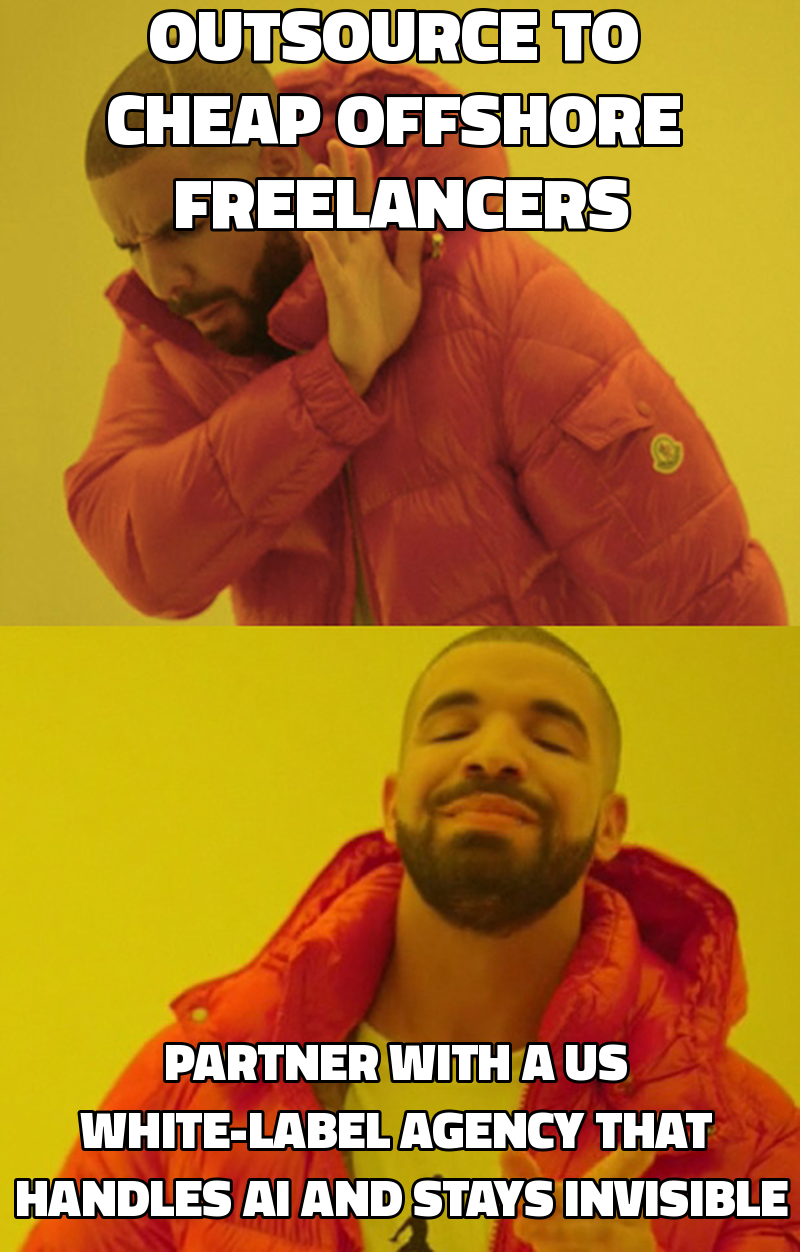
What is a white-label development agency and why does it matter for AI projects?
White-label development means the partner writes code, configures AI models, and ships the product while you brand it as your own. For agencies that sell strategy, SEO or social media, the ability to add a custom chatbot, an automated reporting pipeline or a voice-enabled assistant can double the average contract value. According to a 2023 Gartner survey, 45% of marketing agencies plan to add AI services within the next 12 months, but only 18% have in-house engineers. A reliable white-label partner fills that gap without the overhead of a full-time dev team.
Which AI automation capabilities should you demand from a US partner?
| Capability | Typical use case for agencies | Example tools |
|---|---|---|
| Large language model integration | Chatbots, content generation, SEO recommendations | OpenAI GPT-4, Anthropic Claude, Azure OpenAI |
| Voice AI & IVR | Automated phone support, podcast transcription | Google Dialogflow CX, Amazon Polly, Twilio Voice |
| Workflow automation | Lead routing, reporting dashboards, CRM sync | Zapier, n8n, Make (formerly Integromat) |
| Custom backend services | Data enrichment, subscription billing, analytics APIs | Node.js, Django, FastAPI on AWS Lambda |
| Model fine-tuning & data pipelines | Industry-specific language, sentiment analysis | LangChain, Hugging Face Transformers, Snowflake |
| The partner should have at least two of these capabilities in production. Ask for case studies that show a live OpenAI integration and a voice bot deployed on Twilio for a retail client. |
How to evaluate technical expertise: tools, platforms, and past work
- Portfolio audit – request links to live projects. Look for a clear UI, API documentation and a mention of the AI stack.
- Technology checklist – verify they use version control (GitHub or GitLab), CI/CD pipelines (GitHub Actions, CircleCI) and cloud hosting (AWS, GCP, Azure).
- Team credentials – a senior engineer with a background in machine learning (e.g., former data scientist at a SaaS startup) adds credibility.
- Performance metrics – ask for latency numbers for an LLM call (typical < 500 ms) and uptime guarantees (99.5%+).
- Security compliance – for EU-based clients, confirm GDPR-ready data handling; for US health or finance work, look for HIPAA or SOC 2 compliance. According to Forrester, agencies that vet partners on CI/CD adoption see 30% fewer post-launch bugs. Use that as a benchmark.
Pricing and contract structures that protect your margin
| Model | Typical range per project | Wholesale margin (your share) | When it works best |
|---|---|---|---|
| Fixed-scope pilot | $2,000 - $5,000 | 50% - 70% | New partnership, low risk |
| Time-and-material cap | $150-$200 per hour, max $8,000 | 55% - 65% | Complex AI that needs iteration |
| Monthly retainer | $1,500 - $3,000 for 15-20 hrs | 60% - 70% | Ongoing escalation, predictable cash flow |
| Include a clause that the first pilot is paid, not free, to avoid exploitation. Offer a “scoped prototype” of one screen or one automation for a flat $500 fee as a low-cost proof of concept. |
Red flags and disqualifiers to avoid
- The agency lists "development" as a service on its website – they already have a partner.
- They showcase a "built by" badge linking to another dev shop – the gap is already filled.
- Their team size exceeds 20 engineers or they have an offshore base in India or the Philippines – wholesale margin disappears.
- No recent case studies or social proof in the past 12 months – likely dormant.
- They rely exclusively on no-code tools like Webflow or Bubble for every request – no room for custom AI. If any of these appear, move on quickly. Your capacity is limited; you want partners who need depth, not just a cheap subcontractor.
Comparison tables
Vetting criteria checklist
| Criterion | Why it matters | How to verify |
|---|---|---|
| AI stack depth | Determines ability to deliver custom LLM or voice solutions | Ask for architecture diagram, request private GitHub repo demo |
| Turnaround band | Guarantees you can meet client expectations | Get a written SLA of 2-4 weeks for a $3k pilot |
| Single point of contact | Reduces coordination friction | Confirm a named Delivery Lead with email and phone |
| NDA & non-circumvent | Protects your brand and margin | Review signed NDA template, check clause language |
| Capacity limits | Ensures partner won’t become flaky | Ask for current active partner count (target < 8) |
| Compliance certifications | Required for regulated client data | Request SOC 2 Type II or GDPR addendum |
Pricing models vs margin impact
| Model | Agency bill to client | Your cost | Your margin | Ideal client profile |
|---|---|---|---|---|
| Fixed pilot | $4,000 | $1,500 | 62.5% | One-off AI chatbot |
| Retainer | $2,500/mo | $1,000/mo | 60% | Ongoing automation pipeline |
| Time-and-material cap | $7,000 | $3,000 | 57% | Complex SaaS integration |
| Revenue share (rare) | 20% of product revenue | N/A | Variable | Long-term product co-development |
| Use these tables during the discovery call to illustrate how the partnership protects both sides. |
Step-by-step vetting process for agency selection
- Pre-call filter – run the 10-second site test: if "development" is missing from Services, add to pipeline.
- Discovery call – ask the three gate questions (Volume, Budget, Live need). Score 1-3.
- Technical questionnaire – send a short form covering AI stack, CI/CD, compliance.
- Pilot proposal – draft a fixed-scope SOW for $3,000 with 2-week delivery, include milestone payments.
- Legal review – ensure NDA, non-circumvent and IP assignment clauses are in place.
- Kick-off – assign a Delivery Lead, set up a shared project dashboard (e.g., Notion or ClickUp) that the agency can view but not edit.
- Post-pilot review – evaluate on-time delivery, quality, communication. If scores > 8/10, move to retainer discussion. Following this workflow reduces the time to first paid project to 3-4 weeks, according to internal data from Synthisia's partner program.
Real-world example: RouteMate
RouteMate, a logistics SaaS built for Australian distributors, started as a $4,500 pilot for an AI-driven route optimizer. The agency partner could not handle the custom Python algorithm, so Synthisia delivered the backend on AWS Lambda, integrated OpenAI for demand forecasting, and shipped a white-label UI in React. The agency kept the client relationship, billed $9,000, and paid Synthisia $3,600 – a 60% margin. After the pilot, the agency signed a $1,800 monthly retainer for ongoing feature work, generating $21,600 annual recurring revenue for Synthisia.
Protecting your brand while staying invisible
- NDA – standard 2-year confidentiality, signed by both parties.
- Non-circumvent – clause that prevents the agency from contacting your developers directly.
- White-label branding – deliverables contain only the agency’s logo and contact info.
- Dashboard access – agency sees status, not code, preserving your IP. These safeguards address the common fear that "clients will discover we outsource". By keeping the development layer hidden, you maintain a full-service perception.
Frequently asked questions
How long does a typical white-label AI pilot take?
A well-scoped pilot of $2k-$5k usually completes in 2-4 weeks, assuming the agency provides clear requirements and access to any needed APIs. Fixed milestones and a written SLA keep the timeline predictable.
What if the agency already has a dev partner?
Ask what the current partner cannot do. If they lack AI or voice capabilities, you can position yourself as the specialist layer. If they handle all custom code, the agency is not a good fit.
Can I charge my client more than the partner’s wholesale rate?
Yes. The wholesale margin of 50-70% is designed for you to retain a healthy profit while remaining competitive. Ensure the client sees added value such as faster delivery or higher quality AI.
How do I verify a partner’s compliance certifications?
Request a copy of the SOC 2 Type II report or GDPR addendum. Most US agencies keep these on file for enterprise clients. If they cannot provide, consider them a higher risk.
What tools should the partner use for version control?
GitHub or GitLab are industry standards. Look for a private repository with branch protection rules and pull-request reviews. This indicates disciplined engineering practices.
Is a retainer always necessary after the pilot?
Not always, but a retainer smooths cash flow and guarantees you have capacity when the agency needs rapid escalation. Typical retainers cover 15-20 hours per month of AI model tuning, API updates and bug fixes.
How do I handle intellectual property ownership?
The SOW should state that all code and AI models created for the client belong to the agency (and ultimately the client). Your agreement can include a license to reuse generic components across other partners.
What if the pilot fails to meet expectations?
Include a "stop-loss" clause that allows the agency to terminate the pilot with a 10% refund of the remaining milestone. This protects both sides and shows confidence in your delivery capability.
white-label
Have something to build?
Tell us what you're trying to ship. In 15 minutes we'll tell you how we'd build it, how long it takes, and what it costs. No pitch deck, no pressure.