
Choosing a US White-Label Development Agency for Marketing Firms

White-label development agencies in the USA are firms that build custom software, AI automations, or voice solutions under your brand, while you retain the client relationship and margin. They let marketing, SEO, and branding agencies without in-house engineers deliver full-stack projects without hiring a developer full-time.
Key takeaways
- Verify agency capacity: 5-10 active partners, 15-20 dev hours per week per partner.
- Insist on a fixed-scope pilot before any retainer; aim for $2,000-$5,000 pilot value.
- Require NDA, non-circumvent clause, and clear IP ownership in the contract.
- Compare pricing models: per-project wholesale vs. monthly retainer with a 50-70% margin.
- Look for proven AI/automation expertise (e.g., Dialogflow, AWS Lambda, Zapier) that no-code shops can’t replicate.
- Use a shared project dashboard (Jira, ClickUp, or a simple Airtable view) to keep transparency high.
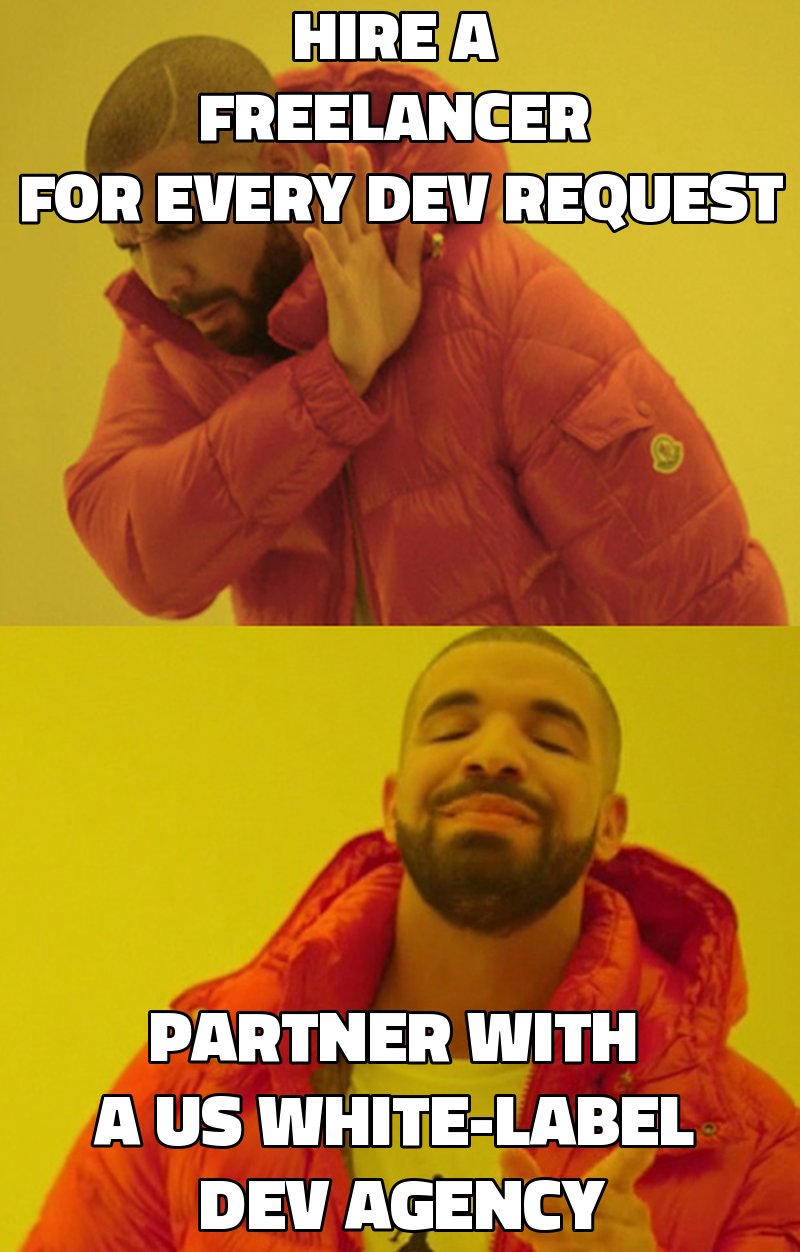
Why white-label development matters for agencies without dev staff
Marketing agencies in the US, UK, and AU often sell web design, SEO, and paid media, but client demand for custom back-ends, chatbots, and voice assistants is rising. According to a 2023 Gartner report, 62% of SMB marketers plan to add AI-driven experiences by 2025. Without developers, agencies either turn away work or outsource to cheap offshore freelancers, risking missed deadlines and brand damage. A US-based white-label partner provides:
- Brand safety – work is delivered under your agency name, with NDA and non-circumvent clauses.
- Technical depth – expertise in Python, Node.js, serverless, and AI APIs that no-code platforms like Webflow can’t handle.
- Predictable cost – wholesale rates let you keep 50-70% margin while quoting confidently.
- Time-zone overlap – US/UK/AU agencies get 3-5 hour overlap with a West-Coast partner, enabling same-day feedback.
Core vetting criteria
| Criterion | What to ask | Ideal range / evidence |
|---|---|---|
| Team size & capacity | How many developers are dedicated to white-label work? | 4-6 engineers, max 20 active partner accounts |
| Tech stack expertise | Do you have production experience with AWS Lambda, Dialogflow CX, Twilio Voice, and React? | Portfolio shows at least 3 AI/voice projects |
| Client confidentiality | Can you provide a signed NDA and non-circumvent clause? | Standard template, no exceptions |
| Turnaround speed | What is your typical delivery window for a $3k scoped project? | 2-4 weeks, with weekly sprint demos |
| Pricing transparency | Do you quote wholesale rates per hour or per project? | Fixed-scope project price disclosed up front |
| Reference clients | Can you share two agency references that kept you invisible to their end-clients? | Positive feedback on reliability and quality |
Understanding contract essentials
| Contract element | Why it matters | Typical clause wording |
|---|---|---|
| Scope definition | Prevents scope creep that eats margin. | "The Partner shall deliver the features listed in Exhibit A within the timeline specified. Any change requires a written Change Order." |
| IP ownership | Guarantees you own the code to resell. | "All source code, designs, and documentation become the exclusive property of the Agency upon full payment." |
| Confidentiality & non-circumvent | Stops the dev partner from poaching your clients. | "The Partner shall not contact, solicit, or provide services directly to any client introduced by the Agency for a period of 24 months." |
| Payment terms | Align cash flow with milestones. | "50% upfront, 30% upon beta delivery, 20% on final sign-off." |
| Liability limits | Caps risk if a launch fails. | "Liability shall not exceed the total fees paid for the specific project." |
| Termination | Allows exit if quality drops. | "Either party may terminate with 15 days written notice if material breach is not cured within 10 days." |
Pricing models and what to expect
| Model | Description | When it works best |
|---|---|---|
| Wholesale per-project | You pay a fixed wholesale price (e.g., $2,500) and invoice your client at $4,500-$5,500. | Low-volume agencies that need clear margins per deal. |
| Monthly retainer | Fixed $1,500-$2,500 per month for up to 15-20 dev hours. | Agencies with steady overflow and want priority scheduling. |
| Hybrid pilot + retainer | First small pilot at $3,000, then transition to retainer after success. | High-trust approach for agencies wary of upfront spend. |
According to Clutch’s 2022 survey of US development firms, agencies that lock in a retainer see 35% higher project success rates because the dev partner can plan resources ahead. Pricing should never be the primary differentiator; reliability and AI expertise win the long-term partnership.
Red flags and disqualifiers
- Development listed as a service on their website – they already serve clients directly, leaving little room for a white-label relationship.
- No NDA or non-circumvent clause – risk of client poaching.
- Offshore base in India, Philippines, or similar – wholesale margin evaporates when you pay USD rates to a low-cost geo.
- Only no-code tools – if they only use Webflow, Zapier, or Squarespace, they can’t handle custom back-ends or AI models.
- Dormant social presence – no new posts or case studies in the past 12 months suggests they are not actively delivering.
How to run a low-risk pilot
- Define a narrow scope – one chatbot flow, a single API integration, or a micro-service that solves a client pain point.
- Set a fixed price – $2,500-$4,000 wholesale, with a clear deliverable checklist.
- Use a shared dashboard – create an Airtable base with columns for "Scope Item", "Status", "Owner", and "Due Date". Grant the agency view-only access.
- Schedule sprint demos – 2-day video calls after each milestone; record them for internal reference.
- Measure success – delivery on time, code quality (linting, unit tests), and client satisfaction score > 8/10.
- Decide on retainer – if the pilot meets criteria, negotiate a 3-month retainer at $1,800/month covering 15 dev hours.
Building a long-term partnership
- Quarterly business reviews – discuss pipeline, upcoming client wins, and any gaps in AI/voice capabilities.
- Capacity buffer – keep the partner’s active agency count below 10 to ensure they never become the flaky freelancer you’re trying to replace.
- Co-branding guidelines – agree on how the partner references the work (e.g., "Developed by a trusted technology partner") without exposing their name.
- Escalation path – assign a single Account Lead on both sides; the partner’s lead should have a track record like the RouteMate SaaS launch.
- Continuous learning – ask the partner to share quarterly tech updates (new GPT-4 integrations, AWS Bedrock, etc.) so your agency can market cutting-edge solutions.
Tools and processes that make white-label seamless
- Project management – ClickUp or Asana with client-visible boards; set permissions so the agency sees only their tickets.
- Version control – Private GitHub repo per project; add the agency’s lead as a collaborator with read-only rights.
- CI/CD pipelines – Use GitHub Actions to auto-deploy to AWS Elastic Beanstalk; share the staging URL for client demos.
- Testing – Automated Jest or PyTest suites; provide a test-report PDF after each sprint.
- Billing – FreshBooks or QuickBooks with custom invoice templates that hide the partner’s cost line.
- Compliance – Ensure the partner follows GDPR and CCPA guidelines; request a Data Processing Addendum (DPA) if they handle EU or California data.
"The most common reason agencies lose clients is not because they lack ideas, but because they lack execution partners who can turn those ideas into code without exposing the agency’s brand."
By following the vetting checklist, contract safeguards, and pilot framework above, you can confidently answer every client request for custom development, keep your margin healthy, and protect your agency’s reputation.
Frequently asked questions
How do I know if a white-label agency is truly US-based?
Check the company’s registered address on the SEC’s EDGAR database or ask for a copy of their W-9 form. A US-based partner will have a physical office in a state like California, Texas, or New York, and will quote rates in USD.
What if the partner’s turnaround is slower than my client expects?
Negotiate a Service Level Agreement (SLA) that defines maximum days per milestone. Most reliable partners commit to 2-4 weeks for a $3k scoped project. If they can’t meet that, consider a retainer that guarantees priority scheduling.
Can I still use my existing freelancers alongside a white-label partner?
Yes, but keep the responsibilities distinct. Use freelancers for low-risk tasks like UI mockups, and reserve the partner for core backend, AI, or voice work. This prevents overlap and protects your IP.
How should I price the final client invoice?
Start with the partner’s wholesale cost, add a 50-70% margin, and factor in project management overhead (usually 5-10%). For a $3,500 wholesale build, a $5,500-$6,000 client invoice is typical in the US market.
What legal protections do I need beyond an NDA?
Include a non-circumvent clause, IP assignment, and a limitation of liability clause. If the partner handles EU data, a Data Processing Addendum is mandatory under GDPR.
How many pilot projects should I run before committing to a retainer?
Two to three pilots of increasing complexity give you a clear view of quality, communication speed, and cultural fit. After the third successful pilot, you can negotiate a 3-month retainer.
Is it worth paying a higher rate for a US partner versus offshore?
While offshore rates can be 30-50% lower, US partners provide faster time-zone overlap, stronger IP protection, and higher client confidence. According to a 2022 Forrester study, agencies that prioritize reliability over price see 20% higher client retention.
What if the partner suddenly becomes unavailable?
Include a continuity clause that requires the partner to provide a qualified replacement with at least 6 months’ notice. Also maintain a backup shortlist of vetted agencies to avoid service disruption.
white‑label
Have something to build?
Tell us what you're trying to ship. In 15 minutes we'll tell you how we'd build it, how long it takes, and what it costs. No pitch deck, no pressure.