
The Ultimate Checklist for Choosing a White-Label WordPress Development Agency

White-label WordPress development agencies provide custom builds under your brand, letting you keep the client relationship while they handle the code. They are ideal for marketing, SEO and branding firms that lack in-house developers but need AI automation, voice integration, or complex back-ends. Use this checklist to pick a partner that is reliable, secure, and capable of delivering the exact solutions your clients demand.
Key takeaways
- Verify the partner’s expertise in WordPress, custom plugins, and modern stacks like React or Next.js.
- Insist on NDA, non-circumvent, and clear ownership clauses before any work begins.
- Start with a paid pilot of $1,500-$2,500 to test speed, communication, and quality.
- Look for documented GDPR and CCPA compliance when handling EU or US client data.
- Prefer agencies that provide a shared project dashboard (e.g., ClickUp, Monday.com) for real-time status updates.
- Red flags include hidden offshore teams, vague pricing, and lack of a single point of contact.
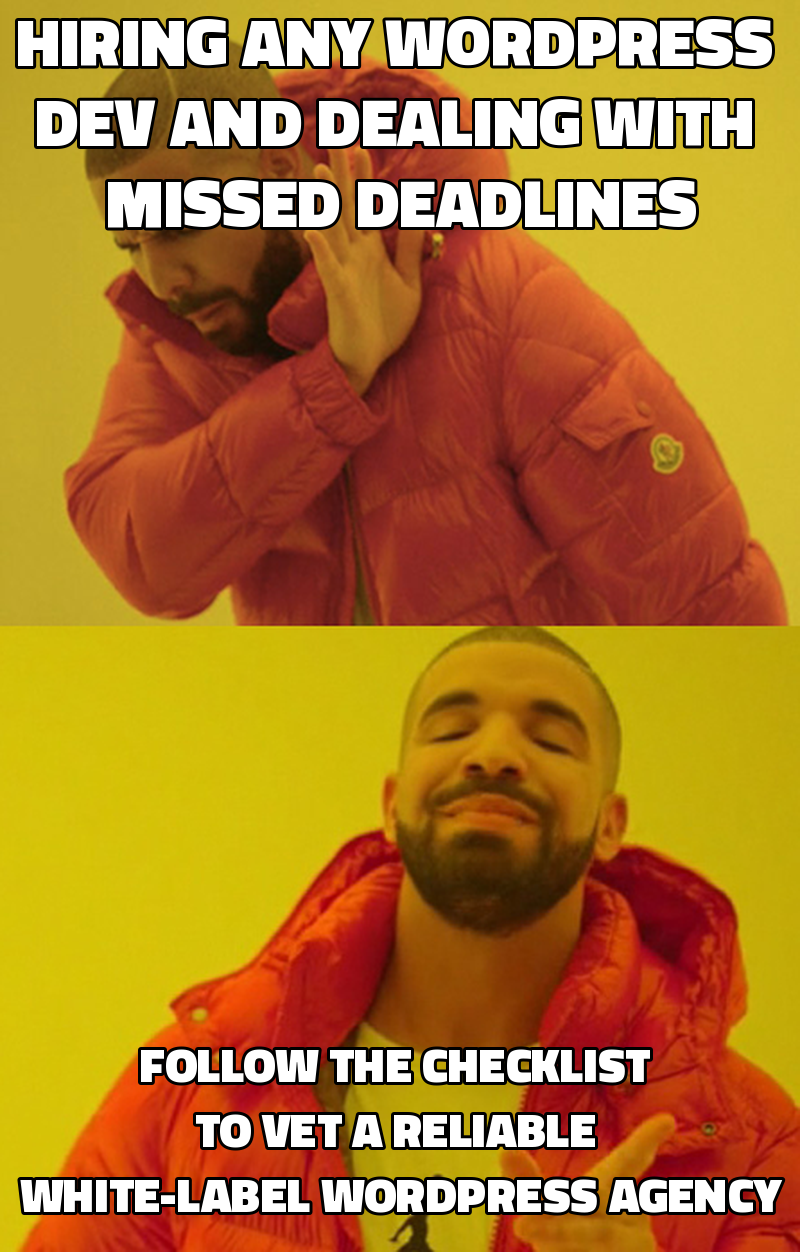
What is a white-label WordPress development agency?
A white-label WordPress development agency builds websites, plugins, and custom integrations that are delivered under your agency’s brand name. The client never sees the developer’s logo, and the agency retains full control over pricing, timelines, and client communication. This model lets boutique marketing firms expand their service catalog without hiring a full-time engineer.
Typical services offered
| Service | Tools / Platforms | Typical delivery time |
|---|---|---|
| Custom theme development | Elementor Pro, Advanced Custom Fields, Tailwind CSS | 2-4 weeks |
| Plugin engineering | PHP 8, Composer, WP-CLI | 1-3 weeks |
| AI-driven automation | OpenAI API, Zapier, Make.com | 1-2 weeks |
| Voice & chatbot integration | Google Dialogflow, Amazon Alexa Skills Kit | 2-3 weeks |
| Performance & security audit | WP Engine, Cloudflare, Sucuri | 3-5 days |
Why agencies without developers need a white-label partner
- Revenue protection – 42% of small agencies outsource web development according to Clutch, preventing lost deals when a request exceeds internal capability.
- Speed to market – Agencies can quote a 4-week turnaround because the partner already has a repeatable process, reducing sales cycle by up to 30% (HubSpot 2023 State of Marketing).
- Specialized expertise – Modern WordPress sites often require headless architecture, AI chatbots, or voice assistants, skills that most no-code shops lack.
- Brand safety – A vetted partner signs NDA and non-circumvent agreements, ensuring the client never learns you outsourced the work.
Checklist: Criteria to evaluate a white-label partner
1. Technical competency
- Core WordPress – Proven experience with Gutenberg blocks, custom post types, and REST API.
- Modern stacks – Ability to build headless sites using React, Next.js, or Nuxt.js when clients need SPA performance.
- AI & automation – Demonstrated projects using OpenAI, LangChain, or Zapier for workflow automation.
- Voice – Prior work integrating Amazon Alexa or Google Assistant.
- Performance – Use of WP Rocket, Cloudflare, and server-side caching; can pass Google PageSpeed 90+.
2. Process transparency
- Single point of contact – One account manager who owns the ticket from kickoff to launch.
- Project dashboard – Shared view in ClickUp, Asana, or a custom portal showing milestones, blockers, and QA sign-offs.
- Defined SLA – Fixed turnaround band (e.g., “Custom plugin in 10-14 business days”).
- Version control – All code stored in a private GitHub or GitLab repo with branch protection.
3. Legal & compliance
- NDA & non-circumvent – Must be signed before any scope discussion.
- Data protection – GDPR and CCPA compliance documented; ability to sign Data Processing Agreements.
- Intellectual property – Clear clause that the agency owns all deliverables.
4. Financial terms
- Wholesale rate – Typically 50-70% of the agency’s billable price; partner invoices you, you invoice the client.
- Pilot pricing – Fixed-scope pilot between $1,500-$5,000 to test fit.
- Retainer model – $1,500-$2,000 per month for 15-20 dev hours after pilot success.
5. Cultural fit & communication
- Time zone overlap – Preference for partners in US, UK, or AU with 3-4 hour overlap.
- Language proficiency – Native-level English for clear specifications.
- Responsiveness – SLA for reply within 4 business hours on Slack or email.
6. Track record & references
- Case studies – At least three published projects with measurable outcomes (e.g., 35% traffic lift, 20% conversion lift).
- Client references – Direct contacts from agencies of similar size.
- Longevity – Minimum 2-year operation, no major gaps in delivery.
Red flags to avoid
| Red flag | Why it matters |
|---|---|
| Listed as a “development agency” on their own site | No gap for you to fill; they already compete with you. |
| Offshore-only team with rates < $15/hr | Likely low quality, high turnover, and margin erosion. |
| No NDA or vague contract language | Risk of IP leakage and client poaching. |
| Promises “fastest possible” without a defined timeline | Sets unrealistic expectations and can damage your reputation. |
| No single point of contact | Leads to fragmented communication and missed deadlines. |
| Lack of GDPR/CCPA documentation | Exposes you to regulatory fines if client data is mishandled. |
Comparison tables
Technical depth vs business impact
| Capability | Tools used | Business impact for agency |
|---|---|---|
| Standard theme dev | Elementor, ACF | Enables quick client launches, low margin boost. |
| Headless WordPress | Next.js, Vercel, GraphQL | Opens high-value SaaS projects, 30-40% higher margin. |
| AI automation | OpenAI, Zapier, Make.com | Differentiates you, allows $2k-$5k upsell per client. |
| Voice integration | Dialogflow, Alexa Skills Kit | Captures niche market, adds $1k-$3k per project. |
Pricing model vs risk level
| Model | Typical rate | Risk for agency |
|---|---|---|
| Fixed-scope pilot | $1,500-$5,000 | Low – clear scope, upfront payment. |
| Time-and-material | $80-$120/hr | Medium – scope creep possible. |
| Retainer (monthly) | $1,500-$2,000 for 15-20 hrs | Low – predictable cost, steady capacity. |
| Revenue share | 50-70% of billable | High – depends on client acquisition success. |
How to run the pilot
- Scope a small deliverable – e.g., a custom landing page with a chatbot.
- Set a fixed price – $2,000 with a 10-day SLA.
- Kickoff call – Align on wireframes, tech stack, and acceptance criteria.
- Mid-point review – Share a demo via a staging URL; collect feedback.
- Final delivery & QA – Provide a checklist covering performance, SEO, and accessibility.
- Post-mortem – Rate communication, code quality, and on-time delivery on a 1-5 scale.
If the pilot scores 4 or above on all dimensions, move to a retainer agreement.
Sample contract clauses you should demand
- Scope definition – Detailed list of deliverables, acceptance criteria, and change-order process.
- Turnaround SLA – “All deliverables will be completed within X business days after sign-off of requirements.”
- Ownership – All source code, designs, and documentation become the agency’s exclusive property.
- Confidentiality – NDA covering all project information, with a 5-year term.
- Non-circumvent – Partner may not approach the agency’s clients directly for a period of 12 months.
- Warranty – 30-day bug-fix period post-launch, no additional charge.
Frequently asked questions
How do I know if a white-label partner can handle AI automation?
Ask for a recent case study that shows an OpenAI or Zapier integration. Verify the tech stack (e.g., LangChain, Node.js) and request a short demo of the automation flow. A partner that can explain prompt engineering and token management demonstrates true expertise.
What is a reasonable turnaround time for a custom WordPress plugin?
For a medium-complexity plugin (e.g., custom booking system), most reputable partners deliver within 10-14 business days after requirements are locked. Faster timelines usually indicate a rushed job that may miss QA.
Should I require the partner to use a specific hosting provider?
Not necessarily. However, they should be comfortable with WP Engine, Kinsta, or Cloudflare-powered environments, as these platforms meet the performance and security expectations of most agency clients.
How can I protect my agency’s brand if the partner makes a mistake?
Include a clause that the partner must correct any defect within the warranty period at no extra cost and that they will not disclose the agency’s name in any public portfolio. Also, keep all client-facing communication under your control.
Is it safe to share client data with a white-label developer?
Only if the partner signs a Data Processing Agreement that meets GDPR and CCPA standards. Ensure they use encrypted storage and restrict access to only the developers working on the project.
What if the partner’s rates increase after we start?
Negotiate a rate cap in the retainer agreement (e.g., a 5% annual increase). Any rate change beyond that must be approved in writing before work begins.
How many partners should I work with at once?
Start with one or two pilot partners. Over-onboarding leads to the same flaky-freelancer experience you’re trying to avoid. A capped roster of 3-5 active partners allows you to maintain high reliability.
Do I need a separate legal entity for white-label contracts?
Not required, but many agencies create a “development services” subsidiary to isolate liability and keep accounting clean. Consult a corporate attorney to decide based on your jurisdiction.
white-label
Have something to build?
Tell us what you're trying to ship. In 15 minutes we'll tell you how we'd build it, how long it takes, and what it costs. No pitch deck, no pressure.