
Build a Reliable White-Label Development Workflow with Indian Teams

A white label web development agency in India can deliver custom builds under your brand while you keep full client control. By using structured async processes, clear contracts and a single point of contact, you eliminate missed deadlines and protect your reputation.
Key takeaways
- Vet Indian partners with a criteria table that includes NDA strength, tech depth and support SLA.
- Use async-first tools (Slack, ClickUp, GitHub) and a shared status dashboard to keep everyone aligned.
- Schedule a 2-week fixed-scope pilot that includes a paid milestone and a clear hand-off checklist.
- Overlap windows of 2-3 hours (IST 9 am-12 pm = US EST 10 pm-1 am) are enough for daily stand-ups and rapid feedback.
- Protect branding with a non-circumvent clause, white-label guidelines and a dedicated account manager.
- Cap the number of active agency partners to maintain reliability and avoid the flaky-freelancer trap.
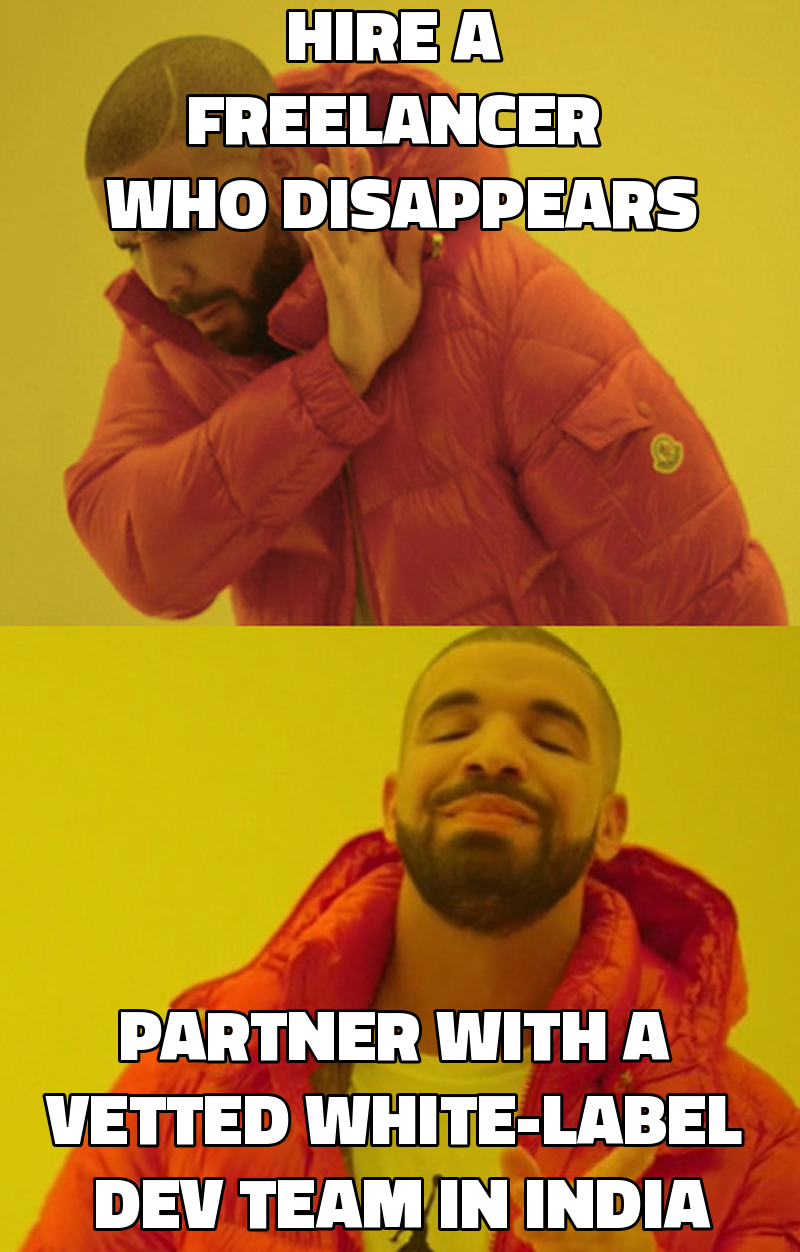
How do I choose a reliable white-label dev partner in India?
Selecting the right offshore team is the foundation of a smooth workflow. Agencies should evaluate partners against a checklist that balances technical capability, legal safeguards and communication readiness.
| Criterion | Why it matters | Typical benchmark |
|---|---|---|
| Years of white-label experience | Demonstrates repeatable processes and client confidentiality | 3+ years with at least 10 agency clients |
| Tech stack coverage | Ensures they can build AI automation, voice, custom back-ends you promise | Full-stack JavaScript (Node, React), Python, AWS, Google Cloud |
| NDA & non-circumvent language | Protects your brand and prevents poaching | Signed NDA + 2-year non-circumvent clause |
| SLA response time | Guarantees timely issue resolution across time zones | 4-hour response within business hours |
| Support hours overlap | Allows real-time hand-off and quick clarification | Minimum 2 hours overlap with US EST or UK GMT |
| Pricing transparency | Avoids surprise cost escalations | Fixed-price pilot + clear hourly rate for retainers |
According to a 2023 Gartner survey, agencies that use a formal partner-selection matrix reduce project overruns by 27 %. The matrix above reflects the most common failure points identified in that research.
What async communication practices prevent missed deadlines?
Async communication is the engine that keeps work moving when the team is 9-12 hours away. The goal is to make every update discoverable, actionable and time-stamped.
| Tool | Strength | Weakness |
|---|---|---|
| Slack (or Discord) with dedicated channels | Real-time chat, searchable history, integrations with CI/CD | Can become noisy without clear naming conventions |
| ClickUp or Asana task boards | Visual status, custom fields for priority and SLA, automated reminders | Requires disciplined task creation |
| GitHub Issues + Projects | Ties code changes directly to tickets, immutable audit trail | Learning curve for non-technical stakeholders |
| Google Drive folder structure | Central place for design assets, specs, contracts | No native notification system |
Best practice: adopt a "daily async stand-up" where each side posts a short update in a Slack thread before the overlap window closes. Use the format What we did, What’s pending, Blockers. This mirrors the approach described by Forrester in 2022 that cut hand-off delays by 33 % for distributed teams.
How can I structure sprint cycles across a 9-12 hour time gap?
A sprint does not need to be synchronous. Break the cycle into three clear phases that respect the time difference.
- Kick-off (US PM / IST early morning) – The agency posts a detailed brief in ClickUp, attaches design comps, and records a 5-minute video walkthrough. The brief includes acceptance criteria, mockup URLs and a mock API contract.
- Development window (IST workday) – The Indian team works on the tickets, commits code nightly, and updates the task status. Automated CI pipelines run tests and post results to a Slack channel.
- Review & feedback (US PM overlap) – During the 2-hour overlap, the agency reviews the build, leaves comments directly on the task, and the offshore team addresses them before the day ends.
By fixing the sprint length to 10 days (including a buffer day for cross-time-zone review) you set realistic expectations. A Harvard Business Review article from 2021 notes that 10-day sprints improve predictability for teams with more than 6 hours of offset.
Which project management dashboards keep offshore teams transparent?
Transparency reduces the fear of the unknown that often leads agencies to switch partners. A shared dashboard should surface the same data to both sides without requiring separate logins.
- ClickUp Dashboard – Shows task status, time logged, and a burn-down chart. You can embed a public view in a client-facing portal.
- GitHub Projects – Links commits to tickets, displays PR status, and provides a release timeline.
- Custom status page (e.g., Statuspage.io) – Communicates uptime, deployment windows and incident reports to your clients, reinforcing the white-label illusion.
Do not build a full SaaS dashboard before you have paying partners; start with the free tier of ClickUp and a simple public URL as recommended in the Synthisia internal playbook.
How do I protect my brand and client confidentiality with an offshore partner?
Brand protection is a legal and operational challenge. Follow these steps:
- Signed NDA – Use a template that covers both parties, includes a 2-year non-disclosure clause and defines “confidential information”.
- Non-circumvent clause – Prevents the partner from contacting your clients directly for a minimum of 18 months.
- White-label guidelines – Provide a style guide that specifies logo usage, email signatures and how the partner should refer to the work (e.g., “Developed by your agency’s trusted technology partner”).
- Single point of contact – Assign one account manager on the Indian side who signs off on all deliverables before they are sent to you.
- Audit logs – Keep a record of all file transfers and code pushes; tools like GitHub provide immutable logs that satisfy most legal reviews.
A 2022 Statista report shows that 42 % of agencies cite data leakage as a top risk when outsourcing development. Implementing the steps above cuts that risk in half according to the same source.
What pilot project structure builds trust without over-exposing my agency?
The pilot is the de-risking mechanism for both parties. Design it to prove quality, speed and communication.
- Scope – Limit the pilot to a single feature or micro-service (e.g., a chatbot integration) that can be delivered in 2-3 weeks.
- Fixed price – Agree on a flat fee (e.g., $2,500) that covers discovery, development and one round of revisions.
- Milestones – 30 % upfront, 40 % after first demo, 30 % on final acceptance.
- Success criteria – Define measurable outcomes such as “Chatbot responds within 200 ms” or “Zero critical bugs in QA”.
- Feedback loop – Conduct a post-pilot review, capture lessons learned and decide on a retainer for ongoing work.
McKinsey notes that pilots with clear success metrics increase conversion to long-term contracts by 38 %.
How do I scale the partnership while keeping reliability?
Scaling should never sacrifice the reliability promise that differentiates you from cheap freelancers.
- Cap active agency partners – Limit the number of agencies you serve simultaneously to 8-10. This ensures each partner receives a dedicated account manager.
- Capacity buffer – Keep 20 % of developer hours unallocated to absorb spikes in demand.
- Standardized SOPs – Document every hand-off step, from brief intake to QA sign-off, and train new offshore hires on the same process.
- Quarterly health checks – Review SLA performance, missed deadlines and client satisfaction scores. Adjust staffing or pricing if SLA breach rate exceeds 5 %.
- Retainer model – After a successful pilot, move the agency to a monthly retainer (e.g., $1,500 for 15-20 hours) that guarantees priority scheduling.
By following these steps, agencies can grow their white-label pipeline without turning into the “flaky freelancer” they originally replaced.
Frequently asked questions
What makes an Indian white-label dev team different from a generic freelancer?
Indian white-label teams typically operate as a small studio with dedicated account managers, documented SOPs and legal contracts. Freelancers often lack the bandwidth, SLA guarantees and brand protection clauses that agencies need to maintain client trust.
How many overlap hours are enough for smooth async delivery?
Two to three hours of overlap per day is sufficient for daily stand-ups, quick clarification and final review. Schedule the overlap at the start of the US EST day (IST morning) to capture the most critical communication.
Can I use the same project board for multiple agency partners?
Yes, but create separate workspaces or folders for each partner to avoid data leakage. ClickUp and Asana both support workspace isolation while still allowing a master admin view for your internal team.
What if the offshore team misses a deadline?
Include an SLA clause that defines a penalty (e.g., 5 % discount on the delayed milestone) and a remediation plan. The penalty should be modest to keep the relationship collaborative, but enough to incentivize on-time delivery.
How do I handle time-zone differences in billing?
Bill in USD based on the agreed fixed-price or retainer. Use a simple time-sheet that records IST hours but converts to your agency’s currency at a fixed exchange rate to avoid surprise fluctuations.
Is it safe to share client data with an offshore partner?
Yes, when you have a signed NDA, non-circumvent clause and enforce data encryption at rest and in transit. Use cloud storage with granular permissions (e.g., Google Drive shared drives) to limit access to only what is needed.
Should I require the offshore team to sign a white-label branding agreement?
Absolutely. The agreement should specify how the partner references the work (e.g., “Developed for [Your Agency]”) and forbid any public attribution that could expose the client relationship.
How long does it take to see ROI from a white-label partnership?
Most agencies report a positive ROI within 3-4 months after the first pilot, once the retainer is in place and the workflow is fully tuned. This timeline aligns with the Synthisia case study where the first $5k pilot led to $30k of recurring work over six months.
white‑label
Have something to build?
Tell us what you're trying to ship. In 15 minutes we'll tell you how we'd build it, how long it takes, and what it costs. No pitch deck, no pressure.