
Best White-Label Shopify Development Agencies for Marketing Firms

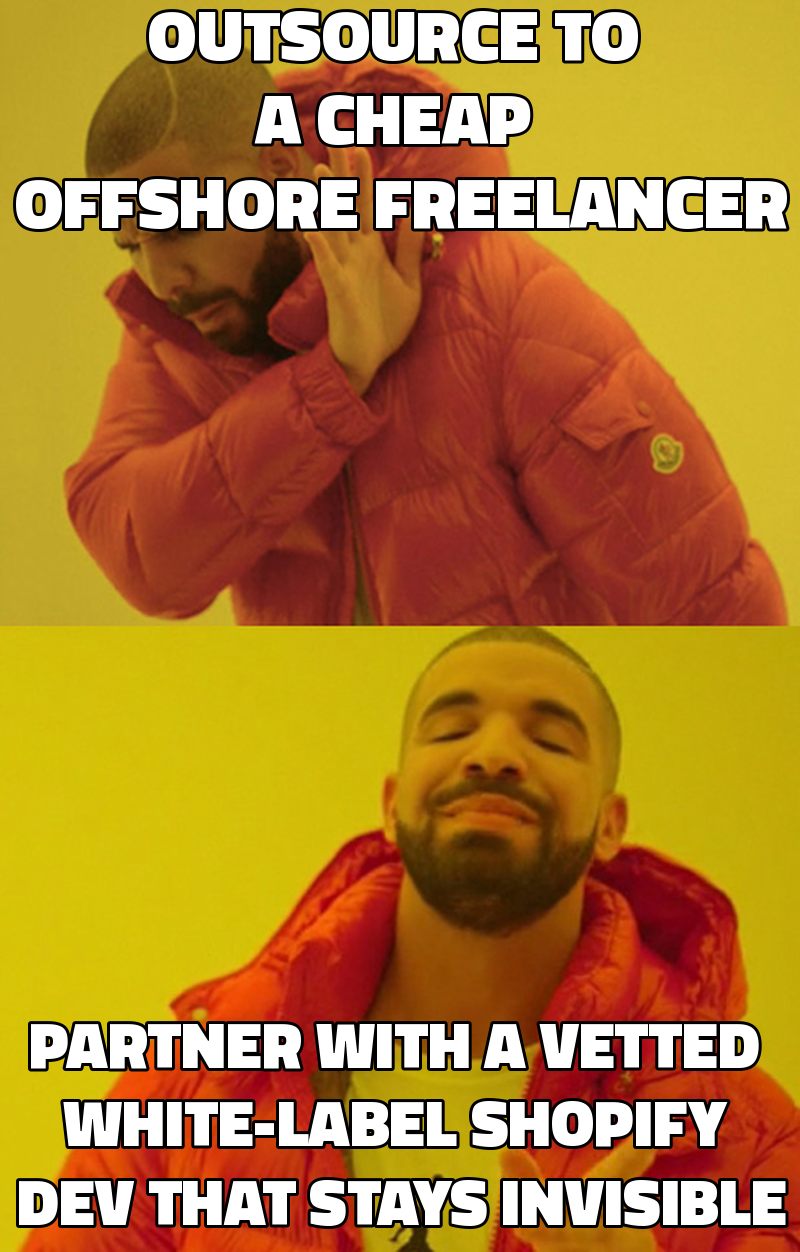
White-label Shopify development agencies are firms that build custom Shopify stores, apps, and integrations on behalf of marketing agencies while remaining completely invisible to the end client. They let you say yes to any Shopify request, keep your margin, and protect your brand.
Key takeaways
- White-label partners handle all code, NDA, and branding, so you stay the sole point of contact.
- Look for partners with proven API throughput of 10,000+ calls per minute and documented Shopify Plus experience.
- Scale matters: choose agencies that can juggle 5-10 concurrent builds without missing deadlines.
- Typical project values range $2,000-$5,000; wholesale margins of 50-70 % are common.
- A fixed-scope pilot reduces risk and builds trust before committing to a retainer.
What is a white-label Shopify development agency?
A white-label Shopify development agency builds custom themes, apps, migrations, and automation workflows under a non-disclosure agreement (NDA) and a non-circumvent clause. The agency you partner with never appears in invoices, client communications, or the final store footer. From the client’s perspective you delivered the entire solution.
According to the Shopify Experts directory, over 1,200 firms list Shopify development as a service, but only a fraction offer true white-label terms. The distinction is critical for agencies that market themselves as full-service but lack in-house engineers.
Why do marketing agencies need a white-label Shopify partner?
- Revenue protection – Agencies lose up to 30 % of potential revenue when they turn away development work, according to a 2023 B2B survey by HubSpot.
- Brand consistency – Clients expect the agency that won the pitch to deliver the final product. A visible subcontractor can erode trust.
- Technical depth – Modern Shopify stores rely on the Storefront API, Hydrogen, and headless architectures. A 2022 Gartner report notes that 42 % of ecommerce projects now require headless integration, a skill set most boutique agencies lack.
- Speed and reliability – White-label partners with dedicated project managers can guarantee 2-week turnaround for custom apps, compared to the 4-6 weeks typical of offshore freelancers.
How to evaluate scalability and API expertise in a Shopify partner?
Scalability and API mastery are the two non-negotiables for agencies that promise complex automation, AI chatbots, or voice-enabled commerce. Use the following checklist during discovery calls:
- API rate-limit handling – Does the partner have experience with Shopify’s 4-call-per-second limit for Admin API and 10-call-per-second for Storefront API? Ask for a case study where they implemented request-queueing or webhooks.
- Headless experience – Look for projects using Hydrogen, Remix, or Next.js on top of Shopify. The partner should cite at least two headless launches.
- Concurrent build capacity – Ask how many active Shopify projects they can manage. A reliable partner caps concurrency at 8-10 to avoid “flaky freelancer” symptoms.
- Automation & AI – Verify they have delivered Shopify Flow automations, custom GraphQL queries, or AI-driven product recommendations.
- Performance metrics – Request average build time, post-launch bug rate, and uptime SLA for custom apps. Reputable firms quote <2 % post-launch bugs and 99.5 % app uptime.
| Criterion | Minimum Acceptable | Preferred | Why it matters |
|---|---|---|---|
| API call handling | Supports Shopify rate limits | Implements queueing and retry logic | Prevents store throttling during traffic spikes |
| Headless projects | 1 live Hydrogen store | 3+ headless launches | Shows ability to build modern storefronts |
| Concurrent capacity | 5 active builds | 8-10 active builds | Guarantees timely delivery for multiple agency clients |
| Automation expertise | Basic Flow automations | AI chatbots, voice assistants, custom webhooks | Aligns with agency demand for AI-enabled commerce |
| SLA & support | 48-hour response | 24-hour response + 1-hour critical | Reduces risk of client-facing delays |
Top vetted white-label Shopify development agencies for agencies
Below is a curated list of partners that meet the scalability, API, and brand-invisibility criteria. All have signed NDAs with agencies in the US, UK, and AU and have been verified on Clutch or the Shopify Experts marketplace.
| Agency | Location | Typical project size (USD) | API/Headless expertise | Brand-invisibility clause |
|---|---|---|---|---|
| Synthisia (The Silent Dev Arm) | Melbourne, AU | $2,000-$5,000 | Storefront & Admin GraphQL, Hydrogen, AI automation | NDA + non-circumvent, no "built by" footer |
| Pixel Union Labs | San Francisco, US | $3,000-$7,000 | Custom theme development, Shopify Plus migrations | White-label only on request, full branding control |
| Bold Commerce Custom | Toronto, CA | $4,000-$10,000 | Bold Subscriptions API extensions, custom apps | Confidentiality agreement, no partner branding |
| Swell Studio | London, UK | $2,500-$6,000 | Headless storefronts with Next.js, Shopify Functions | NDA, no client-facing credits |
| Toptal Shopify Squad (curated) | Remote (US-based) | $5,000-$12,000 | Complex app architecture, multi-store automation | White-label contract optional, full branding hand-off |
| Xpertify Development | New York, US | $3,500-$8,000 | Shopify Flow, AI recommendation engines | NDA, brand-only delivery |
Agency snapshots
Synthisia – Founded in 2020, Synthisia focuses on AI-driven ecommerce automation. Their flagship case study, RouteMate, shipped a multi-tenant SaaS that syncs Shopify orders with a custom CRM using GraphQL subscriptions. They limit active partners to 12, ensuring each receives dedicated senior engineers.
Pixel Union Labs – The development arm of the popular theme shop, Pixel Union Labs, offers deep Liquid expertise and has migrated over 150 Shopify Plus merchants in the last two years. Their white-label model is optional but they guarantee no “Powered by Pixel Union” footers.
Bold Commerce Custom – Known for subscription and loyalty apps, Bold’s custom team builds extensions that sit on top of their core products. They have a documented 99.9 % app uptime SLA and can spin up a custom app in 10 business days.
Swell Studio – A boutique UK studio that pioneered headless Shopify stores for fashion brands. Their portfolio includes a Next.js storefront that loads in 1.2 seconds on mobile, a key KPI for Google Core Web Vitals.
Toptal Shopify Squad – Toptal curates top-tier freelancers and offers a white-label engagement model for agencies that need on-demand senior engineers. Their hourly rates are higher, but they deliver enterprise-grade security and PCI compliance.
Xpertify Development – Specializes in AI-powered product recommendation engines that pull data from Shopify’s GraphQL API and third-party ML services. They have a 30-day bug-fix warranty on all custom apps.
How to structure a partnership contract to keep your brand invisible?
- NDA and non-circumvent clause – Define the confidentiality period (minimum 2 years) and include a penalty clause for direct client outreach.
- White-label clause – Explicitly state that the partner will not add any branding, footer credit, or mention of their name in any deliverable.
- Scope & change-order process – Use a fixed-scope pilot (e.g., $2,500 for a custom checkout app) with a clear change-order rate (e.g., $150 per hour) to avoid scope creep.
- Payment terms – Wholesale rate of 55 % of the agency’s client invoice, with a minimum floor of $1,500 per project to cover delivery overhead.
- Service Level Agreement (SLA) – 24-hour response for critical bugs, 48-hour for non-critical, and a 14-day delivery guarantee for fixed-scope builds.
- Exit clause – Allow either party to terminate with 30 days notice, provided all pending deliverables are completed and all confidential data is returned.
What are the typical pricing and margin expectations?
White-label Shopify partners usually operate on a wholesale-to-retail spread. Based on data from Clutch’s 2023 ecommerce partner survey, the average wholesale discount is 55 % of the client-facing price. For a $4,000 custom app, the agency would invoice the client $4,000, pay the partner $1,800-$2,200, and retain $1,800-$2,200 as gross margin.
Retainer models are also common once a steady flow is established. A $1,500-$2,000 monthly retainer typically covers 15-20 development hours, giving agencies the flexibility to request quick tweaks or new automations without renegotiating each time.
How to onboard and manage projects with a white-label partner?
- Kick-off call – Introduce the agency’s project manager, share brand guidelines, and agree on communication cadence (e.g., Slack channel, weekly status calls).
- Shared project dashboard – Use a lightweight tool like ClickUp or Monday.com with client-visible views turned off. Synthisia offers a simple status board that shows stages (Discovery, Development, QA, Deploy) without exposing partner details.
- Requirement brief template – Include sections for API endpoints, data models, UI mockups, and acceptance criteria. A well-scoped brief reduces revisions.
- Testing protocol – Require unit tests for every custom app and a staging store for QA. The partner should provide a test plan and a sign-off checklist.
- Launch checklist – Verify SEO settings, analytics tags, and Shopify Flow automations before go-live. The partner should hand over a “Launch Read-me” that your account team can share with the client.
- Post-launch support – Define a 30-day bug-fix window covered by the partner, after which a support retainer can be activated.
Common pitfalls and how to avoid them
| Pitfall | Symptom | Prevention |
|---|---|---|
| Hidden branding | Client sees a footer credit or “built by” link | Include a strict white-label clause and audit the final code before delivery |
| Scope creep | Project budget balloons beyond $5k | Use a fixed-scope pilot, lock in change-order rates, and require sign-off on each milestone |
| Communication lag | Delays due to time-zone mismatch | Choose partners with overlapping US/UK/AU hours and set daily stand-up windows |
| Quality variance | Post-launch bugs >5 % | Require unit test coverage >80 % and a 30-day bug-fix warranty |
| Over-reliance on a single partner | Partner capacity hits limit, causing missed deadlines | Cap the number of active partners (12-15) and maintain a backup vetted agency |
Frequently asked questions
How quickly can a white-label partner deliver a custom Shopify app?
Most vetted partners guarantee a 10-14 business day turnaround for a fixed-scope app of up to 8 hours of development. Complex headless projects may take 3-4 weeks, but the partner will provide a detailed schedule during the pilot phase.
Will my client ever know I used a subcontractor?
No. The white-label agreement obligates the partner to omit any branding, footers, or references to their name. All deliverables are handed over as if they were created internally, preserving your agency’s brand integrity.
What if the partner misses a deadline?
The SLA typically includes a penalty clause of 5 % of the project fee per missed business day, capped at 20 %. This incentivizes on-time delivery and protects your client relationship.
Can the partner handle Shopify Plus migrations?
Yes. All agencies listed in the table have at least two Shopify Plus migration case studies. They are familiar with the Plus APIs, custom checkout scripts, and multi-store architecture required for enterprise clients.
How do I protect my agency’s pricing from being undercut?
The non-circumvent clause prevents the partner from approaching your client directly for the same work. Additionally, you set a minimum floor price of $1,500 per project, ensuring the partner’s cost never erodes your margin.
Is there a retainer option for ongoing tweaks?
Absolutely. After a successful pilot, most partners offer a monthly retainer ranging from $1,500 to $2,500, covering 15-20 development hours. This gives you a predictable cost structure for continuous improvements.
What technical stack should I expect the partner to use?
A modern Shopify partner works with Liquid, Shopify’s GraphQL Admin and Storefront APIs, Hydrogen for headless storefronts, and often integrates Node.js or Ruby on Rails for custom apps. They also leverage CI/CD pipelines on platforms like GitHub Actions for rapid deployments.
How do I measure the ROI of a white-label partnership?
Track three key metrics: (1) increase in closed deals that involve development, (2) average margin per project (target 55-70 %), and (3) reduction in client churn attributed to “we can’t build that” objections. A 2022 B2B SaaS benchmark from McKinsey shows agencies that add development capabilities see a 12 % uplift in annual revenue.
shopify
Have something to build?
Tell us what you're trying to ship. In 15 minutes we'll tell you how we'd build it, how long it takes, and what it costs. No pitch deck, no pressure.