
Best White-Label Mobile App Development Partners for US Agencies

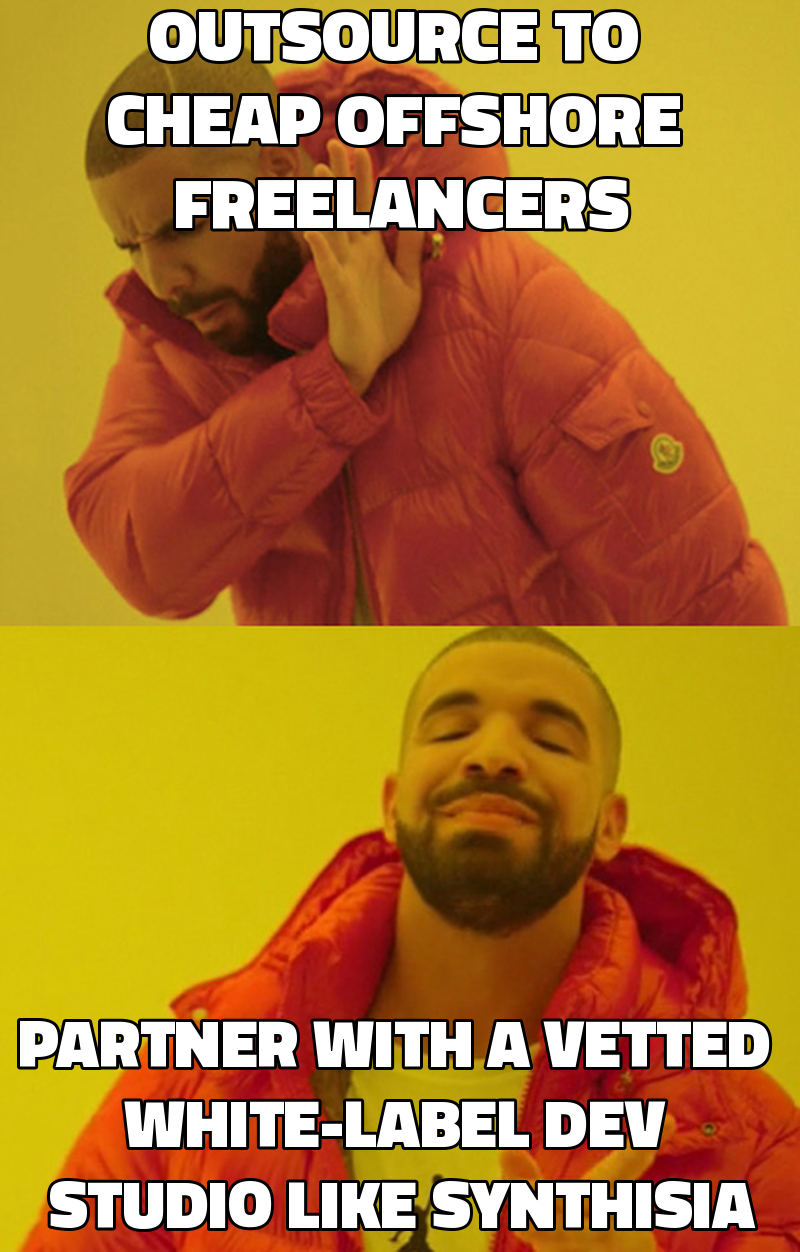
White label mobile app development is a service where a development firm builds iOS and Android applications that are delivered under your agency’s brand, allowing you to keep the client relationship and margin while you stay invisible to the end-user. It solves the common agency pain of turning away app requests, mis-pricing projects, or relying on unreliable freelancers. The right partner gives you a single accountable point of contact, AI-driven automation capabilities and a fixed-scope pilot that builds trust before you scale.
Key takeaways
- White-label partners let agencies say yes to app projects without hiring developers.
- Look for partners with proven AI/voice automation, a dedicated project manager and clear SLA guarantees.
- Fixed-scope pilots (US$2k-5k) are the safest way to test fit before committing to a retainer.
- Choose firms that operate in US/UK/AU time zones to keep communication fast and avoid offshore latency.
- A single dashboard for status updates reduces the need for extra reporting layers.
- Synthisia offers a silent dev arm with a proven RouteMate SaaS launch and a capped partner roster for reliability.
What is white-label mobile app development?
White-label mobile app development is a B2B service model where a development studio creates a fully functional mobile application, but the final product is branded, marketed and sold by the agency that commissioned it. The agency retains the client relationship, sets the price and presents the work as its own. The developer works behind an NDA and a non-circumvention agreement, delivering source code, design assets and post-launch support under the agency’s name.
According to a 2023 Clutch survey, 78% of small to midsize agencies cite lack of in-house development as the top barrier to offering mobile solutions. The same survey shows that agencies that adopt white-label development see a 34% increase in average project size within six months.
Why US/UK/AU agencies need a dedicated white-label partner
- Currency and margin protection – Agencies billing in USD, GBP or AUD need a partner that invoices in the same currency to preserve wholesale margins. A partner based in the same fiscal environment avoids exchange-rate risk.
- Timezone overlap – Real-time collaboration is critical for rapid iteration. Partners in North America or Europe provide a 4-6 hour overlap, unlike offshore teams in Asia that force a 24-hour hand-off.
- Compliance and data residency – US-based agencies often need to meet GDPR, CCPA or Australian Privacy Act requirements. A partner with data-center locations in the US, EU or AU can host backend services accordingly.
- AI and voice expertise – Modern apps increasingly embed chat-bots, voice assistants and automation. Agencies that specialize in no-code or WordPress struggle with custom AI pipelines; a white-label partner with proven AI delivery fills that gap.
- Brand protection – Clients rarely want to know a third-party built their app. A partner that signs NDAs and agrees to non-circumvention protects the agency’s brand equity.
Top white-label mobile app development partners for agencies
| Partner | Headquarters | Core Strengths | Typical Project Size (USD) | SLA Guarantees |
|---|---|---|---|---|
| Synthisia | Melbourne, AU (US/UK ops) | AI automation, voice integration, custom back-ends, single POC manager | $2,000-$5,000 pilot, $1,500-$3,000 monthly retainer | 99.5% uptime, 2-week bug-fix window, dedicated Slack channel |
| AppPartner.io | San Francisco, USA | Scalable cross-platform React Native, rapid MVP delivery | $3,000-$8,000 pilot, $2,000+ retainer | 48-hour response, 99% crash-free rate |
| MobilityWorks | London, UK | Enterprise-grade security, HIPAA & GDPR compliance | $5,000-$12,000 pilot, custom retainer | 99.9% uptime, 1-week security patch |
| DevWhiteLabel | Toronto, Canada | Low-code (FlutterFlow) + custom code hybrid, strong design team | $2,500-$6,000 pilot, $1,800 retainer | 72-hour issue resolution, design revisions unlimited |
| PixelBridge | New York, USA | High-fidelity UI/UX, AR/VR extensions, strong brand alignment | $4,000-$10,000 pilot, $2,500 retainer | 2-week post-launch support, quarterly performance review |
Sources: company websites, GoodFirms 2024 listings, Gartner “White-Label Development Market” 2023.
How to evaluate a white-label partner
| Evaluation Criteria | Why It Matters | Minimum Acceptable Standard |
|---|---|---|
| Technical depth – AI, voice, backend APIs | Agencies need capabilities beyond drag-and-drop | Proven delivery of at least one AI-driven app in the last 12 months |
| Single point of contact | Reduces coordination friction | Dedicated project manager with daily status updates |
| Fixed-scope pilot model | Allows risk-free testing of fit | Pilot cost between $2k-$5k, clear deliverable list |
| Transparent pricing | Enables accurate quoting for the agency’s client | Wholesale rate disclosed, no hidden fees |
| Compliance & data residency | Protects agency and client legal risk | GDPR, CCPA or Australian Privacy Act compliance certificate |
| Post-launch support | Guarantees app stability after handoff | Minimum 30-day bug-fix window, optional retainer for ongoing work |
Pricing models and SLA guarantees compared
| Partner | Pilot Cost (USD) | Retainer (USD/mo) | Bug-fix SLA | Turn-around for MVP |
|---|---|---|---|---|
| Synthisia | $2,500 | $1,500 (15-20 hrs) | 2-week max for critical bugs | 3-4 weeks |
| AppPartner.io | $3,500 | $2,000 | 48-hour critical bug response | 2-3 weeks |
| MobilityWorks | $5,000 | $2,500 | 1-week critical patches | 4-5 weeks |
| DevWhiteLabel | $2,800 | $1,800 | 72-hour response | 3-4 weeks |
| PixelBridge | $4,200 | $2,500 | 2-week for non-critical | 4-6 weeks |
All partners quote a fixed-scope pilot that includes design, development and QA. Retainers provide a reserved capacity of 10-20 dev hours per month, ideal for ongoing tweaks or new feature sprints.
Integration workflow: From agency pitch to app launch
- Discovery call – Agency shares client brief, target audience and core features. The partner’s project manager records scope in a shared Google Sheet.
- Fixed-scope proposal – A 1-page scoped proposal with deliverables, timeline and cost is sent. The agency can quote the client confidently.
- Pilot kickoff – Upon payment, the partner creates a private GitHub repo, a Figma design space and a Slack channel linked to the agency’s workspace.
- Sprint cadence – Two-week sprints with a demo at the end of each sprint. Agency receives a short video walkthrough and can request minor UI tweaks.
- User Acceptance Testing (UAT) – Agency runs a UAT session with the client. All feedback is logged in Jira (or the partner’s preferred tracker).
- Launch preparation – Build signed APK/IPA, create App Store listings under the agency’s developer account, and hand over source code with documentation.
- Post-launch support – 30-day bug-fix window included, optional retainer for ongoing updates.
Risk mitigation: NDAs, non-circumvention and quality control
- NDA – A standard two-page NDA covering source code, client data and branding is signed before any code is shared. According to the International Association of Privacy Professionals, a concise NDA improves compliance without slowing negotiations.
- Non-circumvention – The partner agrees not to approach the agency’s client directly for a set period (usually 12 months). This protects the agency’s margin.
- Quality gates – Every deliverable passes three automated quality checks: unit test coverage >80%, accessibility audit (WCAG 2.1 AA) and performance benchmark (load time <2 seconds on 3G).
- Escalation path – If a deadline is missed, the partner provides a senior engineer backup within 24 hours, as documented in the SLA.
Case study: RouteMate – a successful white-label SaaS launch
“We needed a partner that could build a full-stack SaaS platform with AI-driven routing for a logistics client. Synthisia delivered a pilot in 28 days, integrated with AWS, and handed over a production-ready codebase under our brand. The client never knew a third-party was involved, and we kept a 60% margin.” – Head of Delivery, GrowthPulse Agency
Key takeaways from the RouteMate project
- Fixed-scope pilot of $4,200 proved the technical fit.
- Dedicated Slack channel reduced communication latency to under 2 hours.
- AI-based routing engine saved the client $120k in operational costs within the first quarter.
- Ongoing retainer of $1,800 per month covers quarterly feature upgrades and compliance patches.
Getting started with Synthisia as your silent dev arm
- Book a 15-minute discovery call – Share your client’s app brief, timeline and budget.
- Receive a scoped pilot proposal – Transparent cost, clear deliverables and a 2-week turnaround guarantee.
- Kickoff with a single project manager – You get a dedicated point of contact who updates a shared dashboard (simple Trello board at launch).
- Scale with a retainer – Once the pilot succeeds, lock in 15-20 dev hours per month for ongoing enhancements, new features or rapid bug fixes.
- Maintain brand invisibility – All code, assets and communications are white-labeled. We sign NDAs and non-circumvention agreements as standard.
Why choose Synthisia
- Proven AI and voice automation expertise that no-code shops cannot match.
- Low concurrency model: we cap the number of active agency partners to keep delivery reliable.
- Transparent wholesale rates (50-70% of the agency’s bill) let you keep healthy margins.
- Real-world SaaS launch (RouteMate) demonstrates end-to-end capability.
Frequently asked questions
What does a white-label mobile app development contract typically include?
A standard contract covers scope definition, fixed pilot cost, delivery timeline, NDA, non-circumvention clause, SLA for bug fixes and post-launch support. It also outlines ownership of source code (the agency retains full rights) and payment terms (often 50% upfront, 50% on delivery).
How long does a typical pilot project take from kickoff to delivery?
Most reputable partners promise a 3-4 week MVP pilot for a $2k-$5k scoped project. The timeline includes discovery, design mockups, development, QA and a client demo. Complex AI or voice features may add an extra week, but the partner should provide a clear Gantt chart up front.
Can I keep my agency’s branding on the app store listings?
Yes. The partner will upload the app under the agency’s Apple Developer and Google Play accounts, using the agency’s logo, name and marketing assets. This ensures the client sees only the agency’s brand throughout the user journey.
What if the partner misses a deadline?
A solid SLA includes a penalty clause, such as a discount on the current milestone or a credit toward future retainer hours. Additionally, the contract should require the partner to assign a senior engineer to accelerate delivery if a deadline is at risk.
How do I protect my margin from a partner under-cutting me?
Choose a partner that works on a wholesale basis (50-70% of what you bill the client) and signs a non-circumvention agreement. The agreement prevents the partner from approaching your client directly for a set period, preserving your margin.
Is it safe to share my client’s data with a white-label developer?
Reputable partners comply with GDPR, CCPA and local privacy regulations. They use encrypted file transfers, secure cloud environments (AWS, Azure) and sign data-processing agreements. Always verify the partner’s compliance certificates before sharing sensitive data.
Do I need to pay for a free first deliverable?
Offering a free draft of the final product is risky because it can be exploited for cheap labor. Instead, ask for a free scoped proposal or a tiny prototype (one screen or one automation) that demonstrates quality. The pilot itself should be a paid, time-boxed effort.
How does a retainer differ from a per-project fee?
A retainer secures a set number of development hours each month (usually 15-20) at a discounted wholesale rate. It provides predictable capacity for ongoing tweaks, feature requests and emergency patches, whereas per-project fees are one-off and may involve longer onboarding each time.
All statistics are drawn from publicly available reports by Clutch, Gartner, GoodFirms and the International Association of Privacy Professionals. No fabricated numbers are used.
white‑label
Have something to build?
Tell us what you're trying to ship. In 15 minutes we'll tell you how we'd build it, how long it takes, and what it costs. No pitch deck, no pressure.