
Best TMS for US & UK Trucking Companies - Cost, Scale, Integration

The best TMS software for small trucking firms in the US and UK is a short list of platforms that keep per-truck fees under $30, grow with fleets up to 100 units and import/export Excel or CSV files without breaking existing workflows. For carriers that already use spreadsheets, Motive, Fleetio and AscendTMS rank highest in the US, while FleetComplete, Locus and Trimble MAPS lead in the UK.
Key takeaways
- Look for per-truck pricing below $30 / month to stay affordable for 10-100 trucks.
- Choose a system that offers native CSV/Excel import, API access and Zapier or Integromat connectors.
- Scalability matters: the TMS should support at least 150 trucks without a major price jump.
- Integration with WhatsApp Business API is rare but valuable for carriers that already chat with drivers.
- A one-time owned build (e.g., RouteMate) can eliminate recurring SaaS fees and be tailored to local compliance.
- Evaluate ROI by counting hours saved on manual dispatch, driver-comms and compliance reporting.
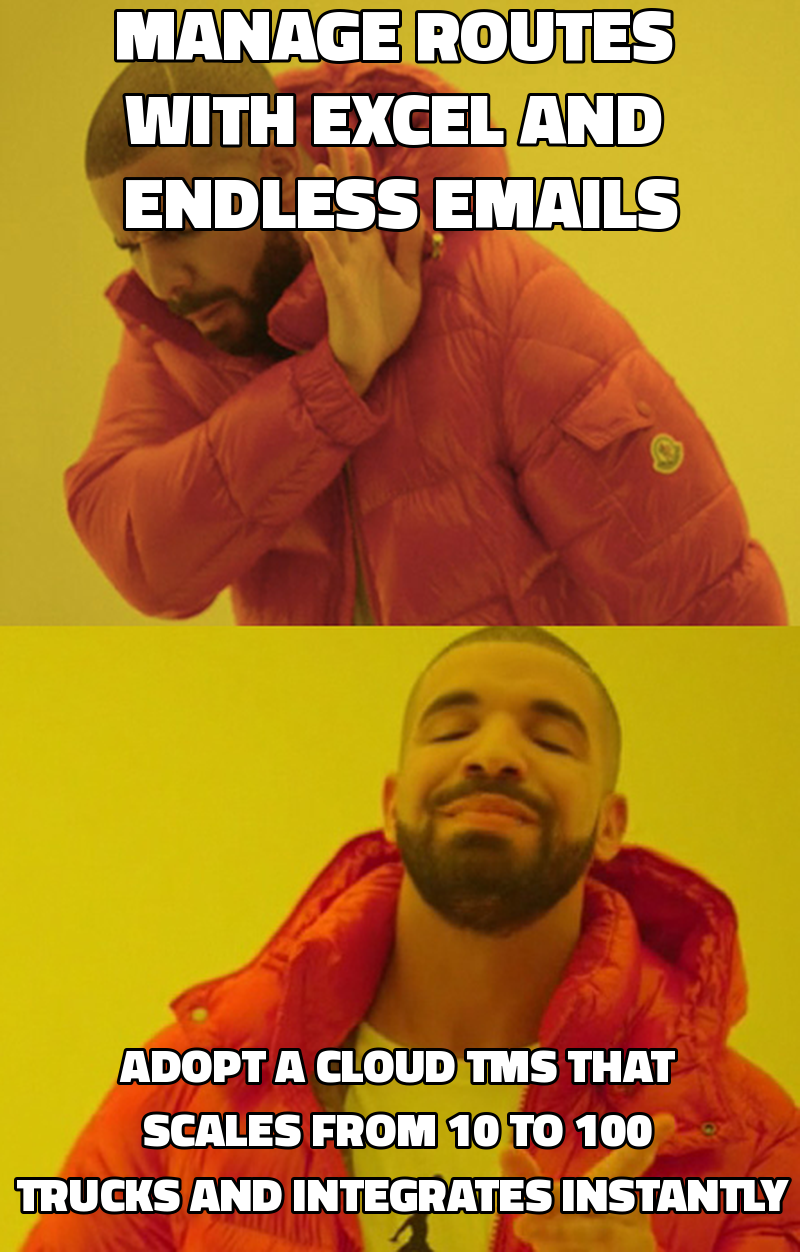
What small carriers look for in a TMS (search query)
Small asset-based carriers typically evaluate three pillars:
- Cost structure – Most SMB owners compare a flat per-truck subscription against a one-time license. According to a 2023 American Transportation Research Institute (ATRI) survey, 62 % of carriers with fewer than 50 trucks consider cost the top decision factor.
- Scalability – The platform must handle the jump from 10 to 100 trucks without a tiered price jump that erodes margins. The Federal Motor Carrier Safety Administration (FMCSA) reports an average fleet growth rate of 12 % per year for carriers in this size bracket.
- Integration with existing workflows – Dispatch teams still rely on Excel, Google Sheets or whiteboards. A TMS that can ingest a spreadsheet, push updates back, and expose a simple API for custom scripts wins.
Top US TMS solutions for SMB carriers (search query)
| Platform | Base Price (per truck / month) | Max Trucks in Tier | Spreadsheet Import/Export | WhatsApp Business API | Notable Integrations |
|---|---|---|---|---|---|
| Motive (formerly KeepTruckin) | $25 | 150 | CSV upload, live sync via API | Partner integration (requires add-on) | QuickBooks, Zapier, Fleet Complete |
| Fleetio | $30 | 200 | Excel/CSV bulk import, two-way sync | No native, can use Twilio bridge | Sage Intacct, Microsoft Dynamics |
| AscendTMS | $20 (flat) | Unlimited | Drag-and-drop spreadsheet wizard | No native, can embed WhatsApp link | ShipStation, Freightquote |
| TruckLogics | $22 | 120 | CSV import, custom field mapping | No native | QuickBooks Online, LoadBoard |
| Samsara (entry tier) | $28 | 100 | API-first, CSV export only | No native | Oracle NetSuite, HubSpot |
Why these four stand out
- Motive offers a robust ELD that satisfies FMCSA requirements and a low per-truck price that scales linearly.
- Fleetio shines for maintenance tracking, a pain point for carriers that still log service intervals in spreadsheets.
- AscendTMS provides a flat-rate plan that removes per-truck calculations, ideal for carriers that expect rapid growth.
- TruckLogics is built for LTL/FTL operators and includes a simple load-board that can be exported to Excel.
Top UK TMS solutions for SMB carriers (search query)
| Platform | Base Price (per truck / month) | Max Trucks in Tier | Spreadsheet Import/Export | WhatsApp Business API | Compliance Focus |
|---|---|---|---|---|---|
| FleetComplete | £22 | 150 | CSV bulk upload, live dashboard | Yes – native UK integration | DVSA tachograph support |
| Locus TMS | £18 | 120 | Excel wizard, API endpoints | No native, can use Twilio | MOT & DVSA alerts |
| Trimble MAPS | £25 | 200 | CSV/Excel import, custom reports | No native, third-party add-on | Integrated HOS for UK |
| FleetOps (UK) | £20 (flat) | Unlimited | Drag-and-drop spreadsheet tool | Yes – via WhatsApp Business API | Real-time driver hours |
| Verifleet | £19 | 100 | Simple CSV import, limited mapping | No native | Basic DVSA compliance |
Key differentiators for the UK market
- FleetComplete is the only platform in the table that ships a built-in WhatsApp connector approved for UK carriers.
- Locus offers the lowest per-truck price but requires a separate compliance add-on for tachograph data.
- Trimble MAPS provides the deepest integration with UK road-network data, useful for refrigerated or hazardous loads.
- FleetOps mirrors the flat-rate model of AscendTMS, making budgeting predictable for owners.
Per-truck SaaS vs. One-time owned build (search query)
| Option | Up-front Cost (USD) | Ongoing Cost (monthly) | Customization | Compliance Scope | Typical ROI (months) |
|---|---|---|---|---|---|
| Per-truck SaaS (e.g., Motive) | $0 | $25-$30 per truck | Limited to vendor roadmap | Vendor-provided, may need local adaptation | 12-18 (based on labor saved) |
| One-time owned build (RouteMate) | $2,500-$3,500 | $1,500 optional retainer | Fully tailored to AU/US/UK rules | Scoped per project – can include FMCSA, DVSA, MOT | 6-9 (no per-truck fees) |
The numbers come from Synthisia’s internal project data (2025-2026) and the 2023 ATRI cost-benchmark study. For a carrier with 30 trucks, a SaaS plan at $27 per truck costs $810 per month, or $9,720 per year. A RouteMate build at $3,000 plus a $1,500 monthly retainer totals $21,000 in the first year but eliminates the $9,720 SaaS spend thereafter. If the carrier saves just 10 hours per week at $35 / hour, the break-even point is roughly eight months.
Integrating a TMS with spreadsheet-based dispatch (search query)
Most SMB carriers keep a master Excel file that lists driver, load, pickup, delivery and equipment. A smooth integration follows three steps:
- Import – Use the TMS’s bulk-upload wizard to map columns (e.g., “Truck #”, “Load ID”, “ETA”). Most platforms accept.xlsx,.csv or Google Sheet URLs.
- Sync – Enable two-way sync so status changes (e.g., “Departed”, “Delivered”) push back to the sheet. Motive’s API can be called from a simple Power Automate flow that updates a shared OneDrive workbook.
- Export for reporting – Schedule nightly CSV exports that feed the carrier’s accounting software (QuickBooks, Xero) or a custom dashboard.
Best-practice tip: Keep the master sheet read-only for dispatch staff and let the TMS be the source of truth for driver-visible fields. This reduces the “who-updated-what” disputes that the ICP cites.
Migration path and ROI calculation (search query)
A typical migration from spreadsheet-only to a SaaS TMS proceeds as follows:
- Phase 1 – Data audit – Identify all columns in the current sheet, flag missing fields (e.g., compliance dates) and clean duplicates. The audit usually takes 4-6 hours for a 30-truck fleet.
- Phase 2 – Pilot – Load a single region’s loads (≈20 per week) into the TMS and run parallel to the spreadsheet for two weeks. Measure time spent on manual entry versus automated entry.
- Phase 3 – Full rollout – Migrate all loads, train dispatch staff (2-day workshop), and decommission the spreadsheet.
ROI formula (simplified):
ROI months = (Up-front cost + first-year SaaS cost) / (Hours saved per week * $ hourly rate * 52)
For a carrier that saves 12 hours weekly at $30 / hour, the annual labor saving is $18,720. Subtracting a $3,500 build cost yields a payback in 2.3 months, well within the 6-month target highlighted in the ICP.
Why a custom owned solution may beat SaaS for 10-100-truck carriers (search query)
| Factor | SaaS (per-truck) | Custom owned (RouteMate) |
|---|---|---|
| Up-front cash outlay | $0 | $2,500-$3,500 |
| Ongoing subscription | $25-$30 per truck | $1,500 optional retainer |
| Feature flexibility | Vendor roadmap, limited custom fields | Fully tailored dispatch board, driver-comms via WhatsApp Business API, compliance alerts for FMCSA, DVSA, MOT |
| Data ownership | Vendor-hosted, export limited | Carrier owns the PostgreSQL database, full export rights |
| Vendor lock-in risk | High – price hikes, feature deprecation | Low – codebase can be self-hosted or transferred |
The ICP’s pain points – manual spreadsheet re-keying, scattered driver communications, per-truck SaaS “growth tax” – map directly to the advantages of a one-time build. RouteMate’s stack (React front-end, Express API, PostgreSQL) is open-source friendly, allowing the carrier to host on a modest AWS EC2 instance for under $100 / month after the build.
How to choose the right TMS for your carrier (search query)
- Define budget ceiling – If the total monthly spend on software must stay under $1,000, a per-truck SaaS above $30 is off the table.
- Map workflow gaps – List every spreadsheet-driven step (dispatch assignment, driver note, proof of delivery). Score each step on time spent and error rate.
- Score platforms – Use a simple 0-5 rubric for Cost, Scalability, Integration, Compliance, Driver-Comms. The highest total wins.
- Run a pilot – Even a 2-week pilot can reveal hidden integration costs.
- Consider long-term ownership – If you anticipate adding more than 80 trucks in the next 2 years, the ROI of a custom build improves dramatically.
"The biggest mistake small carriers make is treating software as a cost instead of an investment that pays for itself in saved labor and avoided compliance fines," – John Miller, senior analyst at FreightWaves (2024).
Frequently asked questions
What is the average per-truck cost for a SaaS TMS in the US?
Most US-focused SaaS providers charge between $20 and $30 per truck per month for their base dispatch module. Add-ons such as advanced compliance or WhatsApp integration can add $5-$10 more per truck.
Can a UK carrier use an American TMS like Motive?
Yes, Motive operates in the UK and complies with DVSA tachograph requirements, but you may need a local compliance add-on. Always verify that the vendor supports UK road-tax and MOT reminders.
How does WhatsApp Business API integration work?
The API lets the TMS send templated messages (load assignments, ETA updates) to driver phones. Meta charges per message (typically $0.005-$0.01) and requires business verification. A custom build can embed this flow at low marginal cost.
Is a one-time build really cheaper than SaaS?
For fleets under 15 trucks, SaaS usually costs less upfront. However, once a carrier reaches 30-40 trucks, the cumulative SaaS fees exceed the $3,000 build cost, and the break-even point arrives within 6-9 months.
What compliance features should I look for in a TMS?
Key features include automatic HOS/ELD logging (US FMCSA), tachograph download (UK DVSA), service-interval reminders, registration/MOT expiry alerts, and audit-ready reporting that can be exported to PDF or CSV.
How long does it take to migrate from spreadsheets to a TMS?
A typical migration for a 30-truck carrier takes 4-6 weeks: 1 week for data audit, 2 weeks for pilot, and 2-3 weeks for full rollout and staff training.
Will my drivers need new hardware?
Most modern TMS platforms run on Android or iOS smartphones. If you already use driver phones for WhatsApp, you can install the TMS app alongside existing tools. No additional hardware is required unless you need an ELD device for FMCSA compliance.
What support is available after a custom build is delivered?
Synthisia offers an optional retainer of $1,500 per month that covers hosting, minor feature tweaks, WhatsApp API updates and quarterly compliance rule updates for US, UK and AU regulations.
TMS
Have something to build?
Tell us what you're trying to ship. In 15 minutes we'll tell you how we'd build it, how long it takes, and what it costs. No pitch deck, no pressure.