
Best AI Automation Agency in USA (2026)

What makes an AI automation agency the best fit for a US-based marketing or SEO boutique? The answer depends on how you weigh three things: the complexity of the workflow you need, the level of control you want over data residency, and the budget you have for a white-label partnership. By matching those factors to the four main categories of providers – off-the-shelf SaaS platforms, local boutique agencies, freelance specialists, and custom/white-label development partners – you can pick a solution that scales with your client roster without sacrificing quality.
Key takeaways
- Off-the-shelf SaaS tools are fast and cheap but often hit limits on custom logic and data residency.
- Local boutique agencies understand US regulations and can act as a front-face partner, yet they may rely on the same low-code stacks.
- Freelancers bring flexibility but can be hard to coordinate across time zones and may lack long-term reliability.
- Custom white-label builds give you full control, bespoke AI models, and a single accountable point of contact – ideal for complex, high-margin projects.
- Evaluate each option against criteria such as scalability, compliance, cost structure, and support model before signing a contract.
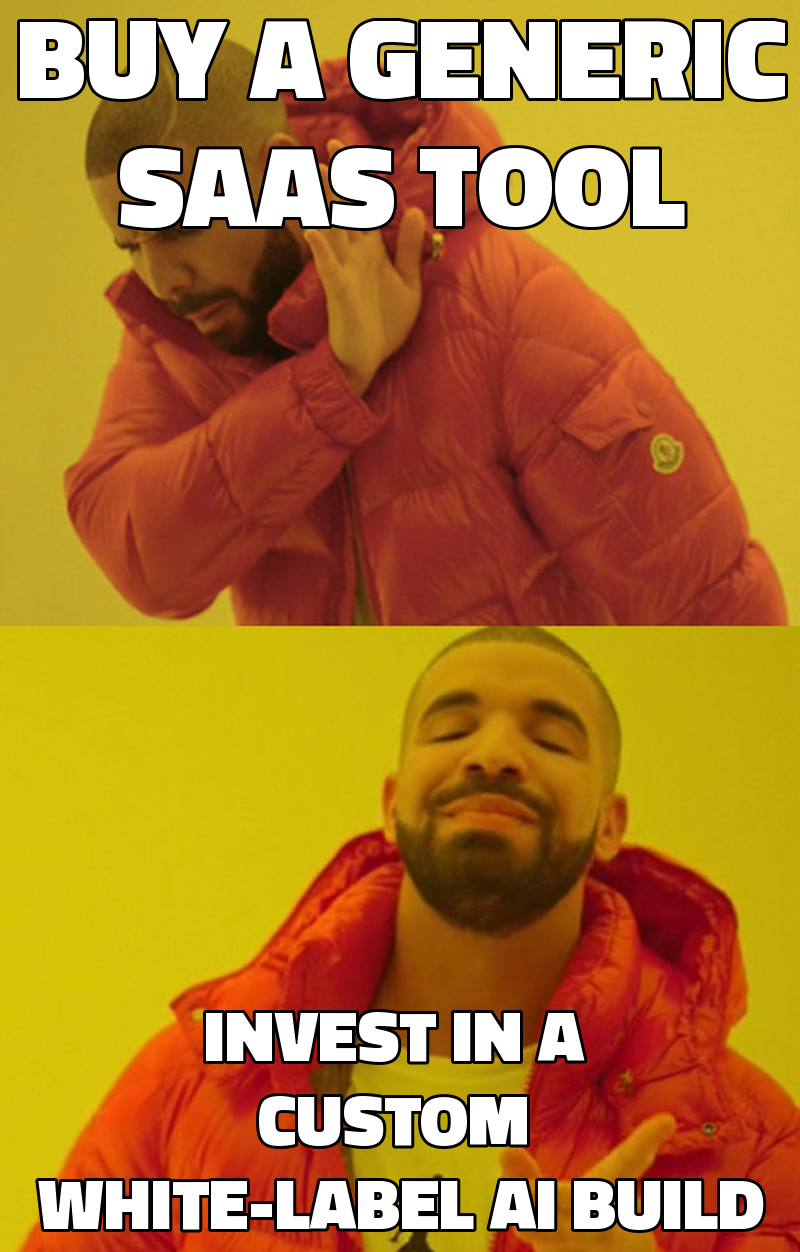
Comparison of option categories
| Option | Typical fit for agency size | Customization depth | Data residency control | Pricing model | Typical turnaround |
|---|---|---|---|---|---|
| Off-the-shelf SaaS | Small to medium agencies that need quick wins | Low – drag-and-drop flows only | Limited – data stored in vendor cloud, often US-based but not always guaranteed | Subscription per seat or usage | Hours to days |
| Local boutique agency | Medium agencies that want a US-based partner for client-facing work | Medium – can add scripts and integrations but still on a platform | Moderate – many agencies host client data on US servers to meet GDPR/CCPA | Fixed project fee or retainer | Weeks |
| Freelance specialist | Any size agency with sporadic needs and tight budgets | Variable – depends on freelancer skill set | Low – freelancers may use personal cloud accounts, risk of cross-border transfer | Hourly or small fixed price | Days to weeks |
| Custom/white-label build (Synthisia) | 5-15 person agencies that lose business because they cannot build AI solutions themselves | High – bespoke pipelines, custom ML models, voice bots, complex integrations | Full – you decide the cloud region, can keep data in the US or a specific state | Fixed-scope pilot then retainer, transparent cost | Weeks to months for larger projects |
Decision criteria you should weigh
| Criterion | Why it matters for US agencies | How each option typically scores |
|---|---|---|
| Compliance (CCPA, HIPAA, industry-specific) | Failure can lead to fines and lost trust | SaaS: mixed; Boutique: good if they advertise compliance; Freelance: risky; Custom: best – you control contracts and hosting |
| Scalability | Ability to add new clients without re-architecting | SaaS: high but limited by feature set; Boutique: moderate; Freelance: low; Custom: high – built to scale |
| Speed to market | How fast you can deliver a proof of concept | SaaS: fastest; Boutique: moderate; Freelance: variable; Custom: slower at start but faster for repeat builds |
| Ongoing support | Need for maintenance, monitoring, and updates | SaaS: vendor support; Boutique: shared account manager; Freelance: ad-hoc; Custom: dedicated point of contact |
| Cost predictability | Budget planning for agency owners | SaaS: subscription predictable; Boutique: project-based can surprise; Freelance: hourly can balloon; Custom: fixed pilot + retainer gives clarity |
When a custom/white-label build is the right call
If your agency frequently receives requests for AI-driven chatbots, voice assistants, or multi-step automation that go beyond the limits of no-code tools, a bespoke solution becomes a competitive advantage. Synthisia specializes in building these complex pipelines under your brand, so your clients never see a third-party name. This model works best when:
- Complexity is high – you need custom ML models, proprietary data sources, or integration with legacy CRMs that no-code platforms cannot reach.
- Scale matters – you anticipate handling dozens of automation projects per year and want a single architecture that can be reused.
- Compliance is non-negotiable – you must store data in specific US states or meet industry-specific regulations; Synthisia lets you choose the cloud region and signs NDAs that protect your brand.
- Margin preservation is key – you want to keep the full client fee and only pay a predictable development cost.
- Reliability is a must – you have been burned by freelancers missing deadlines; Synthisia provides a single accountable contact and a track record of shipped SaaS products (e.g., RouteMate).
How it works
- Pilot phase – a small, fixed-scope project (usually 4-6 weeks) that proves the approach and gives you a concrete cost.
- Full build – once the pilot succeeds, we expand the solution, add more integrations, and hand over a white-label package you can brand as your own.
- Retainer option – after the initial launch, you can keep a low-overhead retainer for ongoing tweaks, monitoring, and new feature requests.
If this sounds like a fit for your agency, consider scheduling a brief discovery call. We’ll outline a pilot scope, estimate costs, and show you how the hand-off works without exposing your brand.
Frequently asked questions
How much does a custom AI automation build typically cost for a US agency?
Costs vary by scope, but a typical pilot for a mid-complex chatbot or workflow runs between $12,000 and $20,000 USD. This includes discovery, design, development, testing, and a hand-off guide. Ongoing retainer rates start at $2,500 per month for maintenance and incremental enhancements.
Can I still use a US-based SaaS tool for simple automations?
Absolutely. For straightforward tasks like lead capture forms or email sequencing, a SaaS platform may be the fastest route. The guide’s comparison table helps you decide when the trade-off in customization is worth the extra investment.
Will a remote partner like Synthisia be able to meet US time-zone expectations?
Synthisia operates with overlapping hours for US clients (typically 9 am-5 pm EST). We use async communication tools for updates, but we schedule live syncs when needed to keep projects on track.
How do I protect my brand when working with a white-label partner?
Synthisia signs a non-disclosure and non-circumvent agreement that explicitly prevents any client-facing mention of our involvement. All deliverables are handed over under your branding, and we never contact your clients directly.
What if my agency needs to comply with HIPAA for a healthcare client?
Because we host the solution on a cloud region you select, we can configure the environment to meet HIPAA requirements, including encrypted storage, audit logs, and Business Associate Agreements. This level of control is not possible with most SaaS tools.
Are there any hidden fees for data residency or compliance?
No. All compliance-related costs are scoped in the pilot agreement. If you need a specific state-level data residency, we factor the appropriate cloud pricing into the fixed quote.
How does the hand-off process work after the build is complete?
We provide full documentation, source code (if you request it), and a training session for your internal team. You receive the assets branded with your logo, and we remain on retainer for any post-launch support you choose.
Is it worth hiring an in-house developer instead of a white-label partner?
For agencies that run a high volume of custom AI projects every month, an in-house dev may make sense. However, the hiring risk, salary overhead, and management burden often outweigh the benefits for firms with 5-15 staff. A white-label partner offers immediate expertise without the long-term payroll commitment.
AI automation
Have something to build?
Tell us what you're trying to ship. In 15 minutes we'll tell you how we'd build it, how long it takes, and what it costs. No pitch deck, no pressure.