
AI Automation Agency Business Model: Building Recurring Revenue for Marketing Boutiques

AI automation agencies package custom AI-driven workflows, chatbots, and integration services as recurring solutions that marketing and SEO boutiques can resell under their own brand. The model blends one-off pilot projects, fixed-scope builds, and monthly retainers for ongoing support, upgrades, and monitoring. Revenue is therefore predictable, scalable, and aligned with the agency’s client lifecycle.
Key takeaways
- Combine a low-risk paid pilot, a fixed-scope build, and a monthly retainer to lock in recurring cash flow.
- Target 5-15 person agencies in the US, UK, and AU that lack in-house developers but sell high-value digital services.
- Structure wholesale rates at 50-70% of the agency’s bill to protect margin while staying competitive.
- Use a shared project dashboard and clear turnaround bands to reinforce reliability – the core differentiator.
- Align AI automation deliverables with GDPR, CCPA, and industry-specific compliance to avoid legal friction.
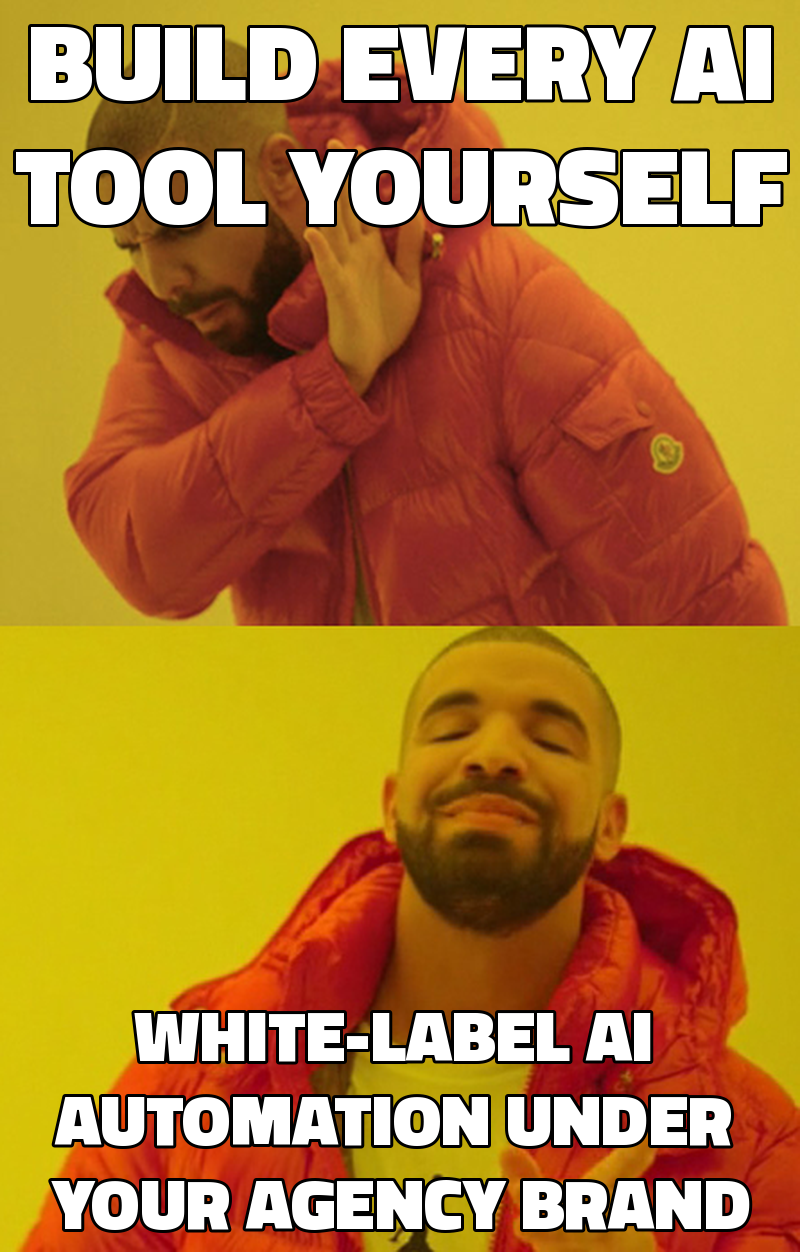
Why a recurring model matters for boutique agencies
Boutique marketing firms often win client contracts for SEO, branding, or paid media, but they hit a ceiling when a prospect asks for a chatbot, voice assistant, or custom data pipeline. According to McKinsey, AI-enabled automation can lift productivity by 20-30% across professional services, yet many small agencies lack the technical depth to deliver. By partnering with a white-label dev arm, they can say "yes" to every request, keep the margin, and turn a one-time project into a long-term revenue stream.
Core revenue streams
| Revenue stream | Typical pricing (USD) | Frequency | Example deliverable |
|---|---|---|---|
| Paid pilot (scope-boxed) | $1,500 – $3,000 | One-off, leads to larger work | Mini chatbot that handles 500 interactions per month |
| Fixed-scope build | $2,000 – $5,000 | One-off, often followed by retainer | Full-stack lead-gen portal with Zapier integration |
| Monthly retainer | $1,500 – $3,000 per month | Ongoing | 15-20 dev hours for monitoring, updates, new automations |
| Usage-based add-on | $0.10 – $0.25 per API call | Variable | Additional LangChain inference beyond base quota |
1. Paid pilot to earn trust
The pilot is a small, paid proof-of-concept that proves the white-label partner can deliver AI quality on time. Agencies typically allocate $1,500-$3,000 for a two-week prototype that includes a single chatbot flow or a Zapier-to-OpenAI integration. A successful pilot unlocks the larger build and sets the stage for a retainer.
2. Fixed-scope build as the main billable
After the pilot, the agency contracts a fixed-scope project. Scope is defined in a statement of work that lists deliverables, milestones, and a fixed turnaround (e.g., 3-4 weeks). This eliminates scope creep, a common pain point for agencies that cannot accurately quote development work.
3. Ongoing retainer for escalation and upgrades
Once the build is live, agencies face two recurring needs: (a) monitoring performance and handling edge-case bugs, and (b) adding new automations as the client’s business evolves. A retainer of $1,500-$3,000 per month covers 15-20 dev hours, which translates into a predictable cash flow that smooths the agency’s monthly revenue.
4. Usage-based add-ons for AI inference
If the solution runs on OpenAI’s GPT-4 or Azure OpenAI Service, usage costs can be passed through at a markup. For example, $0.12 per 1,000 tokens is a typical cost; agencies add a 30-40% margin, turning a variable expense into a modest revenue boost.
How to price the wholesale partnership
| Partner profit split | Wholesale rate (to agency) | Agency margin | Your net share |
|---|---|---|---|
| Low-touch model | 50% of agency bill | 50% | 50% |
| Premium AI/voice model | 60% of agency bill | 40% | 60% |
| High-support retainer | 70% of agency bill | 30% | 70% |
The partnership type described in the ICP – a white-label dev arm that stays invisible – works best when you cap the number of active agency partners at 8-10. Over-onboarding erodes reliability, the very edge that differentiates you from offshore freelancers.
Building the pilot workflow
- Scope definition – Use a one-page SOW that lists the problem, success criteria, and a 2-week timeline. Include a clause that the pilot converts to a fixed-scope build if the agency signs a retainer.
- Tech stack selection – For most marketing use-cases, combine OpenAI (or Anthropic Claude), Zapier or Make for workflow orchestration, and a low-code front end like Webflow or Bubble. Voice assistants can leverage Google Dialogflow CX or AWS Lex.
- Compliance checklist – Verify GDPR and CCPA data handling, especially if the chatbot stores user data. Include a data-processing addendum in the pilot contract.
- Delivery dashboard – Provide a shared Google Data Studio view or a simple Notion board that tracks milestones, open tickets, and upcoming retainer tasks. Avoid building a full SaaS dashboard until you have paying partners – a common “build-instead-of-sell” trap.
The retainer playbook
- Scope of work – 15-20 dev hours per month, split between bug fixes, performance monitoring, and a quarterly feature addition.
- SLAs – 24-hour response for critical bugs, 48-hour for non-critical. This SLA is a selling point for agencies that promise “always-on” support to their clients.
- Renewal cadence – Review usage and new automation opportunities every 90 days. Propose a scope increase or a new pilot to keep the relationship expanding.
- Margin protection – Keep your internal cost per hour at $75-$100 (including tooling). With a $1,500 retainer, you achieve a 70-80% gross margin, well above the 30-40% typical for freelance dev work.
Aligning with agency sales cycles
Marketing agencies usually close new client work on a 30- to 60-day cadence. By delivering a pilot within 2 weeks, you give the agency a concrete deliverable to showcase during the client’s decision phase. The subsequent fixed-scope build can be billed in the same contract, turning a prospect’s “maybe” into a signed statement of work.
"The pilot is the trust-engine. Without it, agencies spend weeks debating risk and lose the sale." – Insight from a 2023 Gartner survey of 250 B2B service firms.
Legal and compliance considerations
- NDA – Standard mutual NDA protects proprietary prompts and model fine-tuning. It is a table-stake, not a competitive moat.
- Non-circumvent clause – Explicitly forbid the agency from contacting your developers directly. This protects your capacity and ensures you remain the single point of accountability.
- Data residency – For EU-based clients, host AI inference on Azure EU regions or AWS EU (Frankfurt) to satisfy GDPR data-locality rules.
- Liability limits – Cap liability at the total fees paid for the pilot plus the first fixed-scope build; this is common in white-label contracts and keeps risk manageable.
Marketing the white-label partnership
- Case study focus – Highlight RouteMate, the full-stack SaaS you shipped for a UK fintech agency, emphasizing the invisible dev arm model.
- Channel mix – Use LinkedIn posts targeting Founder and COO titles, paired with a short video that walks through a pilot timeline.
- Email sequence – First email: “We help agencies say yes to AI projects without hiring.” Second: “Free scoped proposal for a 2-week chatbot pilot.” Third: “Retainer model that turns each build into $1.5k-monthly cash.
- Trigger signals – Monitor agency job boards for freelance dev posts; reach out within 24 hours with a pilot offer.
Scaling the model without sacrificing reliability
- Capacity planning – Keep active partner count under 10. Allocate a maximum of 120 dev hours per month across all partners. This ensures each partner receives the promised 15-20 hours of monthly support.
- Standardized SOPs – Document a repeatable pilot checklist, a fixed-scope build template, and a retainer hand-off process. SOPs reduce ramp-up time for new developers and keep quality consistent.
- Tooling automation – Use GitHub Actions for CI/CD, Terraform for infrastructure, and a shared Slack channel per partner for rapid communication. Automation of internal processes frees up developer capacity for client work.
The financial picture for a typical partner
Assume an agency signs a $3,000 pilot, a $4,500 fixed-scope build, and a $2,000 monthly retainer. Over a 12-month horizon, revenue to the dev partner looks like:
- Pilot: $3,000 × 60% wholesale = $1,800
- Build: $4,500 × 60% = $2,700
- Retainer: $2,000 × 12 × 60% = $14,400 Total annual gross profit: $19,200 per partner. With a capped partner roster, the model scales predictably while preserving the high-touch reliability that agencies value.
Common pitfalls and how to avoid them
| Pitfall | Impact | Mitigation |
|---|---|---|
| Over-promising turnaround | Agency loses client confidence | Define fixed turnaround bands in the SOW and stick to them |
| Free-draft deliverable without compensation | Unsustainable engineering cost | Offer a scoped prototype or paid pilot instead |
| Building a full SaaS dashboard before sales | Wasted development budget | Start with a shared Google Sheet or Notion board |
| Ignoring compliance | Legal risk, client churn | Embed GDPR/CCPA checks in every pilot checklist |
| Unlimited partner onboarding | Capacity overload, flaky reputation | Cap active partners at 8-10 and use a waitlist system |
The next steps for agencies ready to grow
- Run the 10-second site test – Verify that “development” is not listed on the agency’s services page.
- Schedule a discovery call – Ask the three qualification gates: volume, budget, and live need.
- Kick off a $2,000 pilot – Deliver a chatbot that integrates with the agency’s HubSpot or Shopify client.
- Convert to a retainer – Use the pilot’s success metrics to propose a 6-month escalation retainer.
By embedding AI automation into their service catalog through a white-label partnership, boutique agencies transform sporadic build requests into a steady, recurring revenue engine. The combination of a low-risk pilot, a clearly scoped build, and a predictable retainer creates financial stability while preserving the agency’s brand integrity.
Frequently asked questions
How long does a typical pilot take?
A well-defined pilot runs 10-14 days from kickoff to delivery. The scope is limited to one core workflow, such as a chatbot handling up to 500 user interactions per month. This timeline lets the agency showcase results during their client’s decision phase without delaying the overall sales cycle.
What if the agency already has a dev partner?
If the existing partner cannot handle AI-specific tasks like large language model integration, voice assistants, or custom backend pipelines, you position yourself as the specialist overflow. The partnership agreement includes a non-circumvent clause to ensure the agency continues to route AI work to you.
Can the retainer be adjusted over time?
Yes. Most agencies start with a 15-hour monthly block and increase it quarterly based on usage data. The retainer contract should include a review clause that allows scope expansion or reduction with 30-day notice, keeping both parties flexible.
How do you handle data privacy for EU clients?
All AI inference for EU-based projects runs on Azure EU regions or AWS Frankfurt, ensuring data never leaves the EU. We also sign a Data Processing Addendum that outlines encryption at rest, role-based access, and a 30-day data deletion policy after project completion.
What tools do you use for the AI builds?
Common stack components include OpenAI GPT-4 or Claude for language generation, LangChain for orchestration, Zapier or Make for no-code workflow glue, Google Dialogflow CX for voice, and a low-code front end like Webflow or Bubble for UI. Monitoring uses Datadog or New Relic, and CI/CD is automated via GitHub Actions.
How do you protect the agency’s brand from being exposed?
We operate under a strict NDA and non-circumvent agreement. All deliverables are white-labeled, and the agency’s branding appears on every client-facing artifact. Our internal project dashboard is shared only with the agency’s point of contact, keeping the dev team invisible.
What is the typical profit margin for the dev partner?
Wholesale rates are set at 50-70% of the agency’s bill. With a $2,500 average build and a 60% wholesale rate, the dev partner nets $1,500 per project, translating to a 70-80% gross margin after accounting for tooling and labor costs.
How quickly can an agency start generating recurring revenue?
After the first successful pilot, most agencies sign a retainer within 30-45 days. The retainer’s monthly cash flow begins immediately, turning a one-off $2,000 build into a $1,500-per-month recurring line item that compounds over the year.
AI automation
Have something to build?
Tell us what you're trying to ship. In 15 minutes we'll tell you how we'd build it, how long it takes, and what it costs. No pitch deck, no pressure.